
What's Happening?
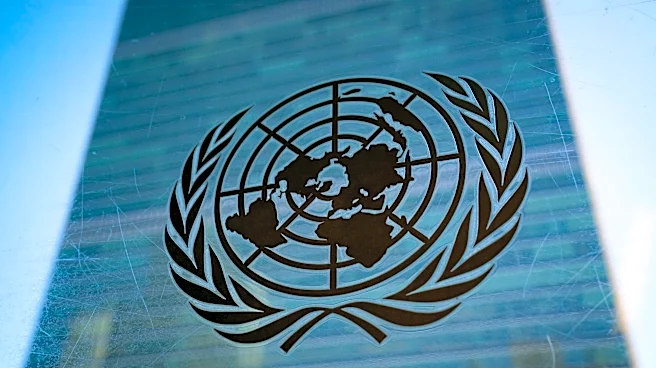
The Stockholm International Peace Research Institute (SIPRI) has reported a significant decline in the number of military personnel engaged in global peacekeeping operations, reaching the lowest level
in at least 25 years by the end of 2025. The number of deployed personnel fell to 78,633, marking a 17% decrease from the previous year and a 49% drop since 2016. This reduction is primarily attributed to a funding crisis within the United Nations, exacerbated by delayed or unpaid contributions from major donors. The funding shortfall has led to cuts in personnel across several major operations. SIPRI highlights that geopolitical tensions and a lack of financial support are threatening the viability of multilateral peacekeeping efforts. The United States, under President Trump, has taken significant actions to withdraw from or defund various UN bodies, including efforts to end the UN Interim Force in Lebanon (Unifil).
Why It's Important?
The decline in peacekeeping personnel and funding poses a significant threat to global conflict management and stability. As multilateral peacekeeping efforts weaken, there is a risk of increased conflicts, which could have severe impacts on civilian populations. The reduction in UN-led operations leaves a gap that regional organizations, often lacking in key capabilities and facing their own funding challenges, are unable to fill. This situation could lead to a rise in conflicts, particularly in regions like Sub-Saharan Africa, which hosts the majority of peacekeeping personnel. The U.S. withdrawal from UN operations further undermines multilateralism, potentially leading to a shift in global power dynamics and a weakening of international norms.
What's Next?
The future of global peacekeeping efforts remains uncertain as financial constraints and geopolitical divisions continue to challenge the sustainability of existing operations. The UN faces a $2 billion budget shortfall, and the approved budget for 2025-2026 is the lowest in a decade. The potential closure of Unifil by the end of 2026, despite ongoing ceasefire violations between Israel and Lebanon, highlights the difficulties in maintaining peace operations. As the UN's role diminishes, alternative models of conflict management may emerge, but their effectiveness remains in question. The international community may need to explore new strategies to address these challenges and ensure the continuation of peacekeeping efforts.