







What's Happening?
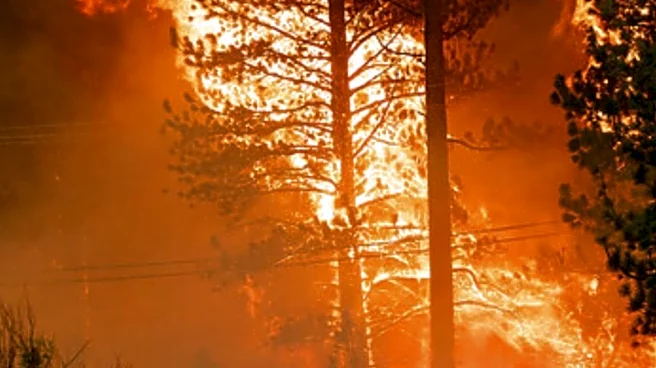
A recent wildfire in Glenmore Forest Park has caused significant damage, raising fears for the survival of centuries-old Scots pines and heavily impacting younger regeneration. According to Forestry and Land Scotland (FLS) officials, the recovery of this
defining species is expected to be a long-term challenge, particularly in areas where the organic soil layer has been severely affected. Eelco de Jong, FLS FM and stewardship forester, expressed concern that many of the oldest 'granny pines,' some over 100 or 200 years old, could be lost, thereby removing important seed sources and habitat for species like capercaillie. While there are encouraging signs of nature recovery, such as native trees resprouting and wildlife returning, the loss of these veteran trees could mean centuries before trees of similar stature return to the landscape.
Why It's Important?
The potential loss of ancient Scots pines in Glenmore Forest Park has significant ecological and environmental implications. These veteran trees are not only a crucial part of the landscape's heritage but also serve as vital seed sources and habitats for endangered species like the capercaillie. Their destruction could lead to a substantial setback in biodiversity and ecosystem health, requiring centuries for natural recovery. The incident also highlights the increasing vulnerability of natural landscapes to wildfires, which are becoming more frequent and intense due to changing climate patterns. This event underscores the need for robust wildfire management strategies and long-term ecological restoration efforts to protect and preserve critical natural resources and their associated wildlife.
What's Next?
FLS staff are actively monitoring the site, observing the regeneration of birch, rowan, and willow from surviving stems and root systems, as well as the return of grasses, bracken, and blaeberry. They are hopeful that Scots pine and birch seedlings will emerge in the coming years, with some already found in burned areas. FLS will also need to assess how areas with burned organic soil respond to heavy rainfall and snowmelt, and manage unstable trees with damaged roots. The wildfire is providing valuable lessons for strengthening resilience across Scotland's national forests and land, informing measures such as firebreaks, peatland and wetland rewetting, access arrangements, and wildfire planning. An Environmental Response Group, including FLS and other conservation organizations, has been established to coordinate monitoring, planning, and information sharing.
Beyond the Headlines
This event transcends a localized ecological disaster, serving as a stark reminder of the broader impacts of climate change and the critical importance of proactive environmental management. The loss of ancient trees represents an irreplaceable cultural and natural heritage, emphasizing the long-term consequences of environmental degradation. The collaborative response and the focus on learning from this incident highlight a shift towards more adaptive and resilient conservation strategies. It also brings to light the complex interplay between natural processes, human intervention, and climate variability, urging a more integrated approach to land management that considers both immediate recovery and long-term ecological stability. The use of advanced LiDAR imaging for mapping the forest post-fire signifies the increasing role of technology in environmental assessment and recovery planning.