
What's Happening?
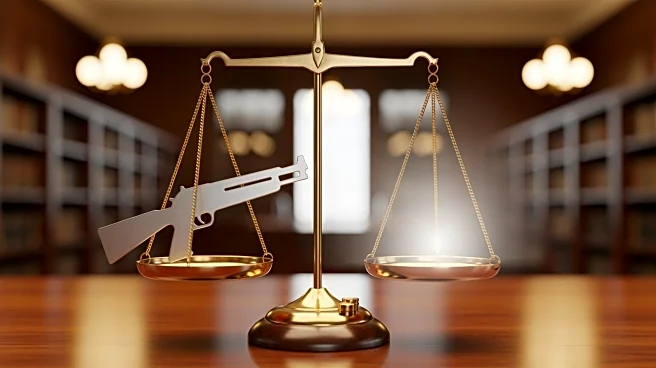
The U.S. Department of Justice has filed a lawsuit against the District of Columbia's Metropolitan Police Department, challenging the constitutionality of the District's ban on AR-15s and other firearms.
The lawsuit claims that the District's gun laws, which require registration with the D.C. Metro Police, unconstitutionally infringe on the Second Amendment rights of citizens. The Justice Department argues that the current laws prevent law-abiding citizens from owning firearms for lawful purposes, such as self-defense, and that the District's refusal to register these firearms forces residents to risk wrongful arrest. Attorney General Pamela Bondi emphasized the Department's commitment to protecting Second Amendment rights, while Assistant Attorney General Harmeet K. Dhillon highlighted the lawsuit's aim to enforce rights established in the landmark 2008 Supreme Court decision in Heller.
Why It's Important?
This lawsuit underscores ongoing national debates over gun rights and the Second Amendment. The outcome could have significant implications for gun legislation across the United States, potentially influencing how other jurisdictions regulate firearms. If successful, the lawsuit may reinforce the rights of individuals to own semi-automatic weapons, impacting public policy and law enforcement practices. The case also highlights the tension between federal and local authorities over gun control measures, with potential ramifications for how cities and states can regulate firearms within their borders. The Justice Department's action reflects a broader federal stance on protecting gun ownership rights, which could embolden similar legal challenges in other regions.
What's Next?
The lawsuit will proceed through the federal court system, where both sides will present their arguments. The District of Columbia is expected to defend its gun laws, potentially arguing the necessity of such measures for public safety. The case may attract attention from gun rights and gun control advocacy groups, who could file amicus briefs or engage in public campaigns. A ruling in favor of the Justice Department could prompt legislative changes in D.C. and influence similar laws nationwide. Conversely, a ruling upholding the District's laws might encourage other jurisdictions to adopt similar regulations. The case could ultimately reach the Supreme Court, given its constitutional implications.