






What's Happening?
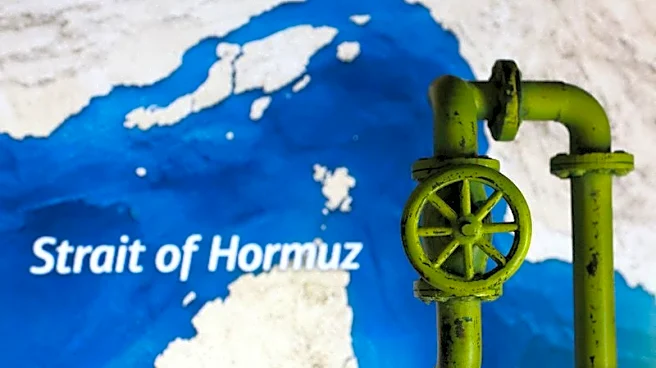
An oil tanker chartered by Petco, a unit of Malaysia's state energy firm Petronas, successfully passed through the Strait of Hormuz, carrying Iraqi crude. This transit follows Iran's decision to permit Malaysian vessels to navigate the strait without
restrictions, despite recent tensions in the region. The decision comes after discussions between Malaysia's Prime Minister Anwar Ibrahim and Iranian officials. Iran had previously closed the strait in response to U.S. and Israeli airstrikes, which began in late February. However, Iran has since allowed passage for vessels not linked to the U.S. or Israel. The strait is a critical maritime corridor, handling about a fifth of global oil and LNG flows. Malaysia's foreign ministry confirmed that seven ships linked to Malaysian companies, including Petronas, were cleared to transit the waterway.
Why It's Important?
The Strait of Hormuz is a strategic chokepoint in global oil and LNG transportation, and any disruptions can have significant implications for global energy markets. Iran's decision to allow Malaysian vessels to pass without tolls or restrictions helps stabilize the flow of energy resources, which is crucial for maintaining market stability. This move may also reflect Iran's strategic interests in maintaining diplomatic relations with Malaysia and other non-aligned countries amid regional tensions. For Malaysia, ensuring the safe passage of its vessels is vital for its energy sector and economic interests. The situation underscores the geopolitical complexities of the region, where maritime routes are often influenced by broader political and military dynamics.
What's Next?
The situation in the Strait of Hormuz remains fluid, with potential for further developments depending on regional geopolitical dynamics. Stakeholders, including shipping companies and energy firms, will likely monitor the situation closely to assess risks and adjust their operations accordingly. Iran's stance on levying fees on vessels could also evolve, impacting shipping costs and logistics. Additionally, diplomatic engagements between Iran and other countries with vested interests in the strait may continue, potentially influencing future maritime policies and agreements.