








What's Happening?
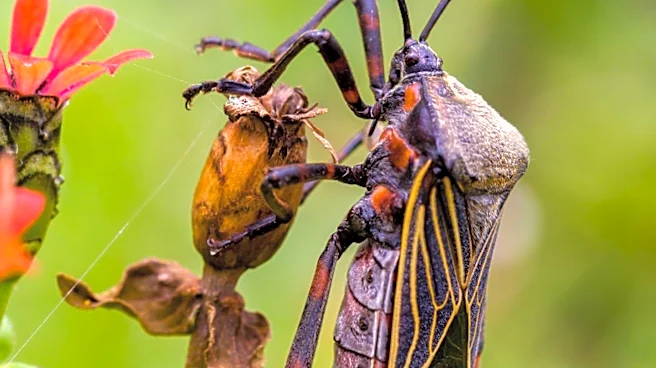
A new genus of plant-feeding insects from Australia, previously unknown to science, has been named Swiftiephylus in tribute to Taylor Swift. This naming was carried out by Sarah Schroeder, a doctoral student in entomology at the University of California,
Riverside. The genus Swiftiephylus includes four new species, with names inspired by Swift and her albums: Swiftiephylus taylorae, Swiftiephylus amator, Swiftiephylus intrepidus, and Swiftiephylus poetorum, which are Latin for Taylor, lover, fearless, and poets, respectively. The insects are part of the Miridae family, the largest family of true bugs, and are closely associated with Australian she-oaks. Schroeder hopes that naming these insects after Swift will bring attention to insect diversity and the importance of insect conservation.
Why It's Important?
The naming of a new insect genus after Taylor Swift serves as a unique intersection of popular culture and scientific discovery. This initiative aims to leverage Swift's global influence to raise awareness about entomology and the critical need for insect conservation, a field that often struggles for public attention and funding. By connecting a beloved cultural icon to scientific research, it can potentially engage a broader audience, including Swift's extensive fanbase, in discussions about biodiversity and environmental protection. This approach highlights the creative ways scientists are seeking to make their work more accessible and relevant to the general public, fostering a greater appreciation for the natural world and the ongoing efforts to document and preserve its species. It also underscores the vast amount of undiscovered life on Earth and the continuous work of taxonomists.
What's Next?
The formal description of the Swiftiephylus genus and its species has been published in the journal Insect Systematics and Evolution. This scientific publication will serve as the official record of the new genus and its classification. Moving forward, researchers will continue to study these insects to understand their ecological roles, behaviors, and evolutionary relationships. The hope is that the publicity generated by the name 'Swiftiephylus' will encourage more public interest in entomology and conservation efforts, potentially leading to increased support for biodiversity research. This could also inspire other scientists to use creative naming conventions to draw attention to their discoveries, bridging the gap between scientific communities and the public.
Beyond the Headlines
The decision to name a new insect genus after Taylor Swift sparks a broader conversation about the practice of naming species after celebrities. While some in entomological circles view this practice with controversy, Schroeder argues it can be a positive tool for conservation. This approach challenges traditional scientific nomenclature by injecting elements of popular culture, potentially making scientific discoveries more relatable and memorable to the public. It also highlights the personal connection scientists often have to their work, as Schroeder, a self-proclaimed 'Swiftie,' found an authentic way to honor both her scientific mission and her personal interests. This trend could signify a shift in how scientific communication is approached, moving towards more engaging and accessible methods to foster public interest and support for critical scientific endeavors like taxonomy and conservation.