
What's Happening?
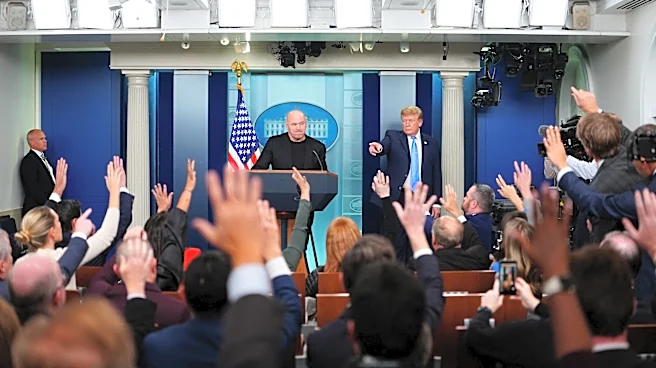
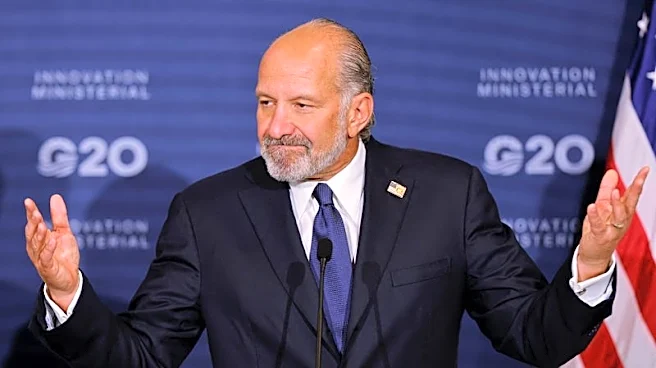
Stephen Miller, the new White House Chief of Staff, has enacted a ban on unauthorized meetings between White House staff and lobbyists or special interests. This policy requires White House staff to obtain prior approval from the Office of White House Counsel
for any meetings with registered lobbyists concerning government policy. The Office of Public Liaison (OPL) will serve as the primary point of contact for engagement with external stakeholders. This move marks a significant departure from the approach of Miller's predecessor, Susie Wiles, who prioritized maintaining relationships with K Street and other external groups. The new directive aims to ensure that White House staff dedicate their time to the American people and the President's agenda, rather than the interests of D.C. lobbyists.
Why It's Important?
This policy shift is important because it fundamentally alters the access and influence of lobbyists within the White House. By requiring explicit approval for meetings, the administration is signaling a more controlled and centralized approach to external engagement. This could significantly reduce the direct influence of special interest groups on policy decisions, potentially leading to policies that are less shaped by corporate or industry-specific agendas. Lobbyists, particularly those who relied on established relationships, will need to adapt their strategies, possibly seeking direct access to President Trump or working through other White House components like the Domestic Policy Council or National Economic Council. This change could empower the White House to pursue its 'America First' agenda with fewer external pressures, but it may also create new challenges for businesses and organizations seeking to communicate their perspectives to the administration.
What's Next?
The immediate consequence of this ban is that lobbyists will face a more challenging environment for direct engagement with White House staff. Many are currently assessing how to navigate this new landscape, with some considering direct appeals to President Trump, who is known for being relational. Others may focus on engaging with specific White House councils or departments that are not directly under Miller's purview. The long-term impact will depend on how strictly the policy is enforced and whether it leads to a sustained reduction in lobbyist influence. This move could also prompt a re-evaluation of lobbying strategies across Washington D.C., potentially shifting focus towards congressional engagement or public advocacy campaigns. The effectiveness of this ban in curbing perceived 'corrupt D.C. influence' will be a key point of observation.
Beyond the Headlines
Beyond the immediate operational changes, this policy reflects a broader ideological stance against what the administration perceives as undue influence from special interests. It aligns with an 'America First' agenda that prioritizes national interests over those of specific industries or groups. This move could set a precedent for future administrations, potentially leading to a more permanent shift in how the executive branch interacts with lobbying entities. Ethically, it raises questions about transparency and access, as some argue that direct engagement with lobbyists, when properly disclosed, can provide valuable insights into policy impacts. However, proponents of the ban would argue it reduces the potential for conflicts of interest and ensures that policy decisions are made based on public good rather than private gain. The success or failure of this policy could influence public perception of government integrity and the role of money in politics.