





What's Happening?
Hawai'i Governor Josh Green announced that he will be traveling out of state with his family from June 8 to June 23. During his absence, he will retain executive authority and maintain regular communication with state leadership and his Cabinet. Acting
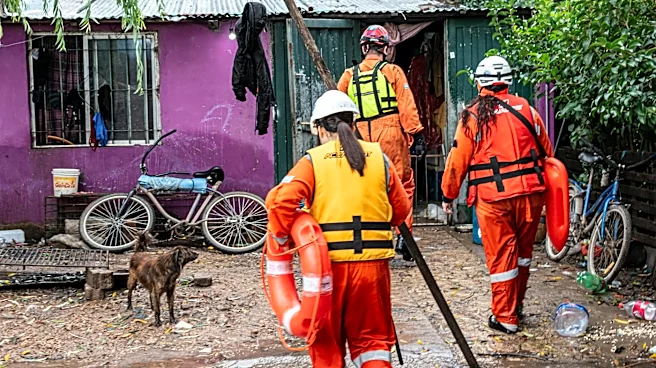
Lt. Gov. Keith Regan will manage day-to-day government operations and serve as acting governor, in line with state law and continuity of government procedures. The administration has established a coordinated leadership and emergency response structure to ensure uninterrupted government functions. Maj. Gen. Stephen Logan, Director of the Hawai'i Emergency Management Agency, along with other Cabinet leaders and emergency management officials, will support state operations in case of emergencies. Emergency response protocols and preparations for emergency proclamations have been coordinated in advance to ensure rapid response capabilities statewide.
Why It's Important?
The governor's travel plans highlight the importance of continuity in government operations, especially in a state like Hawai'i, which is prone to natural disasters such as hurricanes and volcanic activity. By ensuring that a robust emergency management system is in place, the administration aims to maintain public confidence in the state's ability to respond to potential crises. The delegation of authority to Acting Lt. Gov. Keith Regan, who has extensive public service experience, underscores the administration's commitment to seamless governance. This approach not only ensures that government functions continue without interruption but also reassures residents that their safety and well-being remain a priority, even in the governor's absence.
What's Next?
During Governor Green's absence, the state will continue to monitor and respond to any emergencies that may arise. The established emergency response protocols will be tested if any incidents occur, providing an opportunity to assess the effectiveness of the current plans. The administration's ability to maintain operations smoothly during this period could serve as a model for other states in managing leadership transitions and ensuring continuity of government functions. Additionally, the experience gained during this time may lead to further refinements in emergency management strategies and protocols.