
What's Happening?
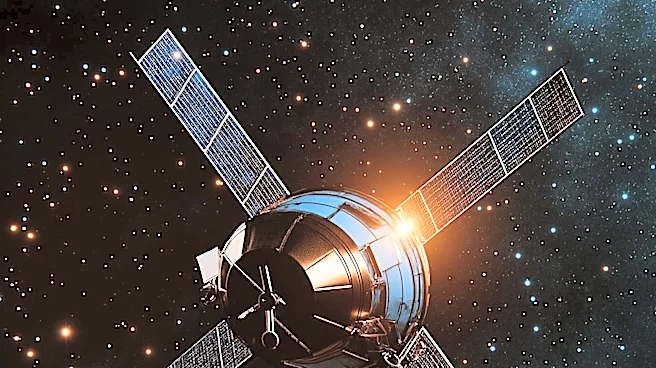
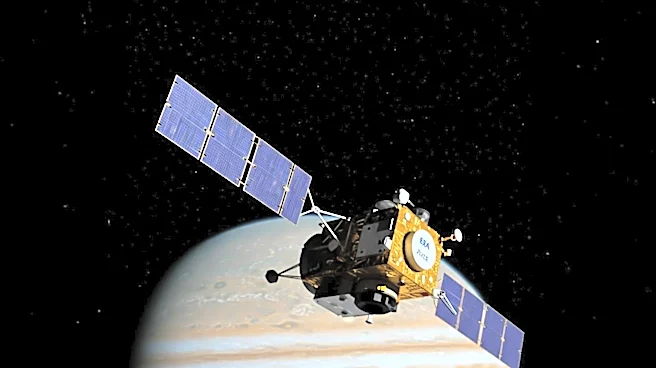
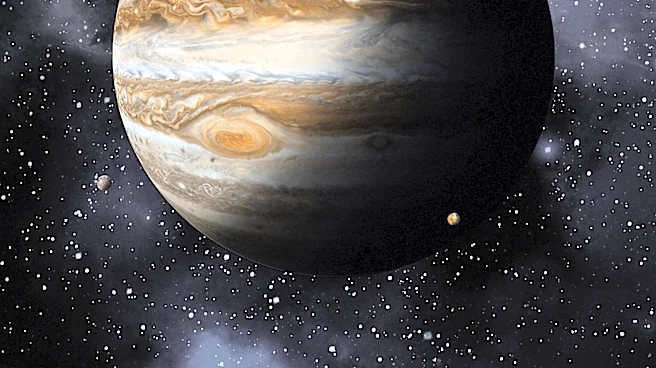
NASA's Europa Clipper spacecraft is en route to Jupiter's moon Europa, following its launch on October 14, 2024. The mission will cover 1.8 billion miles, utilizing planetary gravity assists to reach its destination by April 2030. Europa Clipper aims
to investigate whether Europa's subsurface ocean could support life, conducting 49 flybys to study the moon's ice shell, ocean, and surface composition. The mission will not directly detect life but will assess the moon's habitability.
Why It's Important?
Europa Clipper's mission is crucial for understanding the potential for life beyond Earth. By studying Europa's ocean and ice shell, scientists hope to determine if the moon has the necessary conditions to support life. The mission's findings could guide future exploration efforts and inform the search for extraterrestrial life. Additionally, the mission demonstrates the use of gravity assists in space exploration, highlighting the innovative approaches required for long-distance missions.
What's Next?
As Europa Clipper continues its journey, NASA will prepare for the spacecraft's arrival and the start of its scientific campaign in 2031. The mission will focus on collecting data during flybys, with scientists analyzing the results to build a comprehensive understanding of Europa's environment. The findings will contribute to planning future missions, potentially including landers or probes to directly explore Europa's surface and subsurface ocean.