

What's Happening?
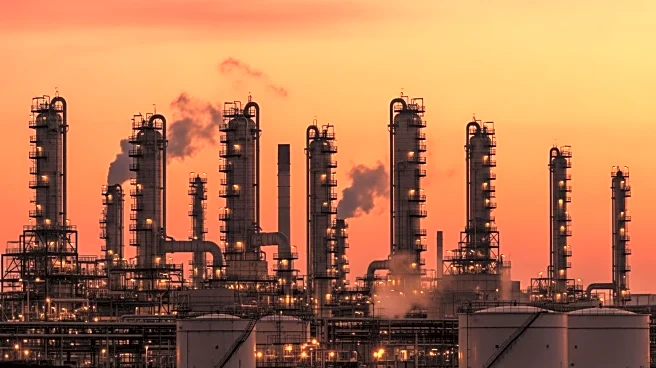
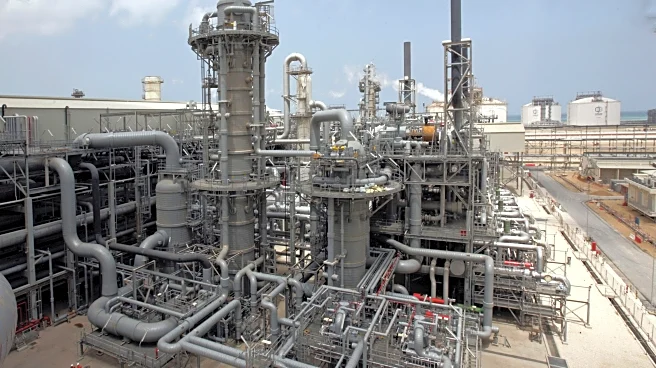
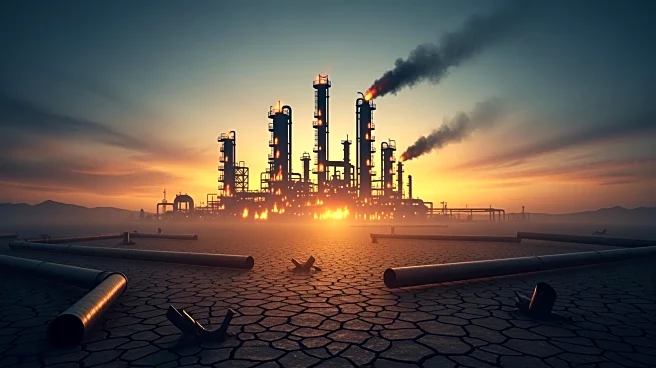
QatarEnergy has announced a significant financial setback due to missile attacks on its Ras Laffan Industrial City hub, resulting in an estimated annual revenue loss of $20 billion. The attacks, attributed to Iran, have severely damaged two liquefied
natural gas (LNG) production units, Trains 4 and 6, which together account for 12.8 million tonnes per annum of output. This has led to a 17% reduction in Qatar's LNG export capacity, impacting markets in Europe and Asia. The damage is expected to take three to five years to repair, necessitating a declaration of force majeure on some long-term LNG contracts. The incident has also affected the production of associated products, including condensates, liquefied petroleum gas, naphtha, sulphur, and helium. Despite the extensive damage, no casualties were reported due to prompt emergency response actions.
Why It's Important?
The missile attacks on Qatar's LNG facilities have significant implications for global energy markets. The reduction in LNG export capacity is likely to exacerbate supply constraints, particularly in Europe and Asia, where Qatar is a major supplier. The prolonged outage could lead to increased energy prices and force countries to seek alternative energy sources. The geopolitical tensions resulting from the attacks have also contributed to a sharp rise in global oil prices. The situation underscores the vulnerability of global energy infrastructure to geopolitical conflicts and the potential for such events to disrupt international energy markets. The declaration of force majeure on long-term contracts could lead to legal and financial challenges for QatarEnergy and its partners.
What's Next?
The recovery and repair of the damaged LNG facilities are expected to take several years, during which time QatarEnergy will need to manage its reduced export capacity. The company may seek to renegotiate contracts and explore alternative supply arrangements to mitigate the impact on its customers. The geopolitical tensions in the region are likely to persist, with potential implications for future energy security and market stability. Stakeholders, including governments and energy companies, will need to closely monitor the situation and consider strategies to enhance the resilience of energy infrastructure against similar threats.