
What's Happening?
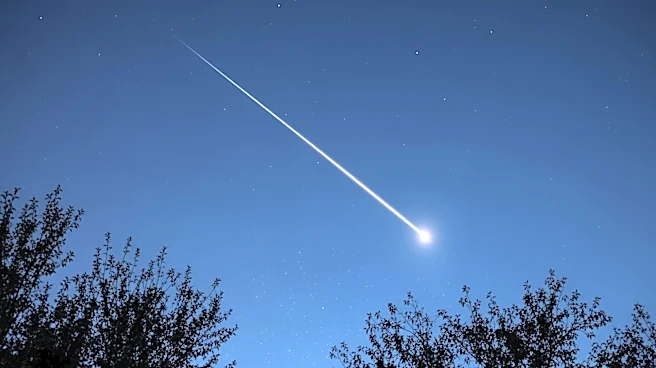
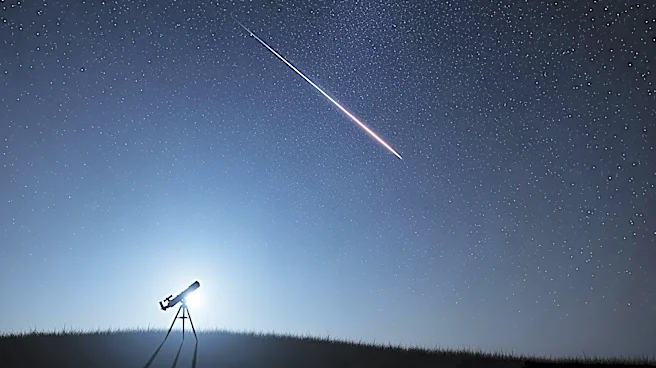
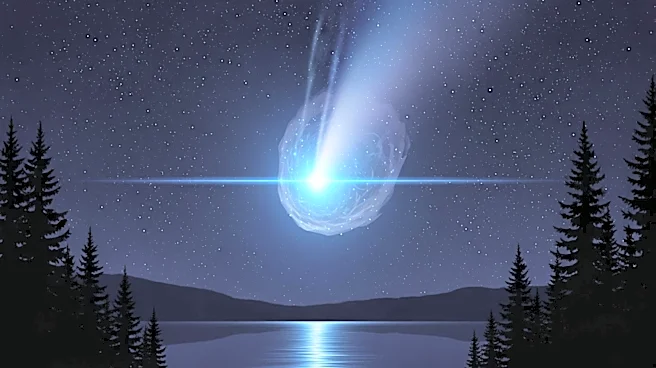
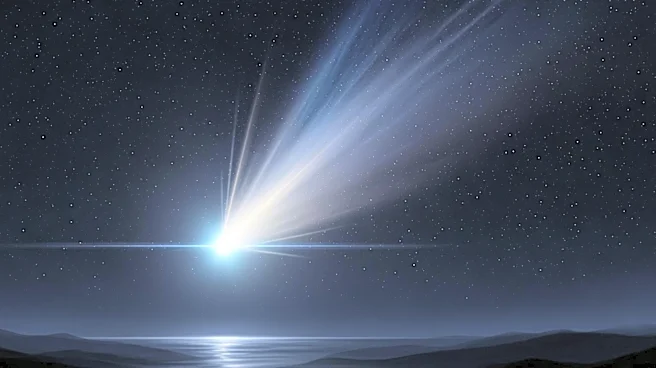
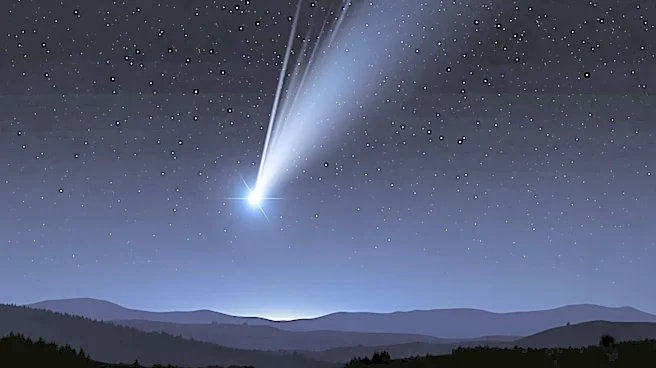
Comet C/2025 R3 (PanSTARRS) is set to make a rare appearance in the Northern Hemisphere, visible for a short time before sunrise until April 21. The comet will make its closest approach to Earth on April 26,
passing at a distance of 45.5 million miles. Discovered in September 2025 by the Pan-STARRS survey in Hawaii, the comet is expected to reach maximum brightness, potentially visible to the naked eye. Stargazers are advised to look towards the eastern sky with binoculars for the best viewing experience.
Why It's Important?
The appearance of Comet PanSTARRS provides a unique opportunity for both amateur and professional astronomers to observe a celestial event that occurs only once every 170,000 years. Such events can inspire public interest in astronomy and science, encouraging educational outreach and engagement. The comet's visibility also underscores the importance of preserving dark skies, free from light pollution, to enhance astronomical observations.
What's Next?
As the comet approaches its closest point to the sun, known as perihelion, on April 19-20, observers are encouraged to take advantage of clear skies and minimal light pollution for optimal viewing. The event may also prompt discussions about future astronomical phenomena and the role of technology in enhancing our understanding of the universe.