



What's Happening?
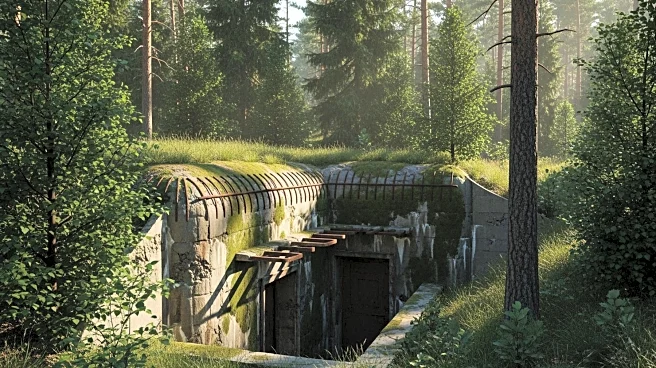
The Wolf's Lair, located in the Masurian countryside of northeastern Poland, was a significant military headquarters for Adolf Hitler during World War II. This secluded complex was strategically chosen for its proximity to the Soviet border, facilitating
Operation Barbarossa, the invasion of the Soviet Union. Built by Organisation Todt with forced labor, the site included 50 bunkers and 70 barracks, protected by natural camouflage and landmines. After the war, the site was left to decay but has since been developed into a tourist attraction, drawing around 300,000 visitors annually. The Polish government took control in 2017, preserving it as a historical site.
Why It's Important?
The transformation of the Wolf's Lair into a tourist site highlights the complex relationship between history and memory. As a place where pivotal decisions of World War II and the Holocaust were made, it serves as a reminder of the atrocities committed. The site's development into a tourist attraction raises ethical questions about 'dark tourism' and the commercialization of historical sites associated with human suffering. It also reflects broader efforts to preserve history for educational purposes, ensuring that the lessons of the past remain accessible to future generations.
What's Next?
The continued development of the Wolf's Lair as a tourist site may lead to increased visitor numbers, necessitating further infrastructure improvements. The Polish government may face ongoing debates about the ethical implications of promoting such sites. Additionally, as far-right groups gain traction in Europe, the site's management will need to ensure that it remains a place of reflection and education, rather than a rallying point for extremist ideologies.
Beyond the Headlines
The Wolf's Lair's history as a Nazi headquarters and its current status as a tourist site underscore the challenges of preserving sites of historical trauma. The site's development into a tourist attraction reflects a broader trend of 'dark tourism,' where visitors are drawn to locations associated with death and suffering. This trend raises questions about how societies remember and interpret their past, and the role of tourism in shaping historical narratives.