




What's Happening?
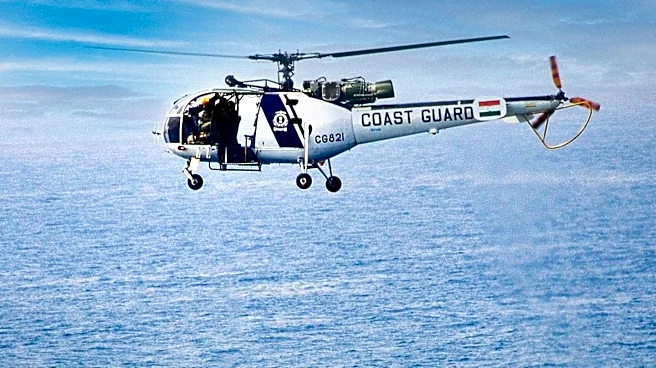
India is significantly reorienting its maritime security strategy in the North-West Indian Ocean region, which includes the Arabian Sea, Persian Gulf, Gulf of Oman, Gulf of Aden, and the Red Sea. This shift is driven by the region's geopolitical volatility
and strategic importance, particularly in light of the 2026 Middle East conflict and its impact on global energy supply chains. Traditionally, India has faced challenges in fostering cohesion in its immediate South Asian neighborhood, leading New Delhi to leverage its maritime geography by expanding its strategic focus to include distant continental geographies. This 'maritime-turn' is central to India's calibrated strategic reorientation, with the North-West Indian Ocean and its littoral countries becoming priorities for India's maritime security strategy and operational preparedness. The region's salience has grown alongside the Indo-Pacific discourse, positioning India as a principal maritime security actor.
Why It's Important?
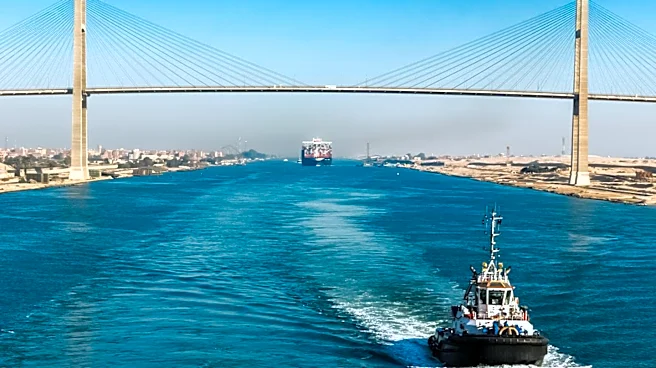
This strategic reorientation by India holds significant implications for global maritime security and trade, including for U.S. interests. The North-West Indian Ocean is a critical hub for global supply chains, energy routes, and sea lines of communication. Increased instability or disruptions in this region can directly affect global oil markets and the world economy, impacting U.S. industries reliant on these routes and energy supplies. India's enhanced focus on maritime domain awareness, interoperability through naval exercises, and cooperation with non-resident stakeholders aims to foster a stable and secure maritime order. This stability is crucial for maintaining the free flow of commerce and energy, which benefits international trade and prevents potential economic shocks that could ripple through U.S. markets. The involvement of non-resident actors, including the U.S., in regional security frameworks underscores the interconnectedness of global maritime stability.
What's Next?
India's maritime security strategy in the North-West Indian Ocean will continue to be shaped by three operational pillars: maritime domain awareness (MDA) cooperation, naval exercises to enhance interoperability, and cooperation with non-resident countries. India is expected to deepen partnerships with regional countries like the United Arab Emirates (UAE) and Oman, as well as European partners such as France, Italy, and Spain. Multimodal connectivity networks, such as the proposed India-Middle East-Europe Economic (IMEC) corridor, are also anticipated to play a role in this strategy. Future naval exercises, like the planned iterations of Exercise Naseem Al Bahr with Oman and the continued participation in multilateral exercises like Malabar with Quad partners, will further strengthen operational synergies and strategic trust. Diplomatic efforts to end regional hostilities, facilitated by mediators, will also influence the evolving strategic equations in the region.
Beyond the Headlines
The deeper implications of India's evolving maritime strategy extend to the broader geopolitical landscape of the Indo-Pacific. By reimagining its neighborhood to include distant continental geographies, India is asserting its role as a significant regional power capable of influencing security dynamics far beyond its immediate borders. This shift also highlights the increasing importance of maritime diplomacy as an instrument of foreign policy, with navies serving as key tools for engagement with like-minded countries. The emphasis on MDA, interoperability, and broader coalitions reflects a recognition that maritime security challenges, such as piracy, digital cable disruptions, and energy supply chain strains, require collaborative, multi-national solutions. This proactive approach by India could set a precedent for other nations in managing complex security environments and fostering a rules-based maritime order in strategically vital regions.