





What's Happening?
Student activists from Columbia University's chapter of the Sunrise Movement have filed an administrative complaint against the university's Center on Global Energy Policy (CGEP). The complaint, submitted to New York City's consumer protection bureau,
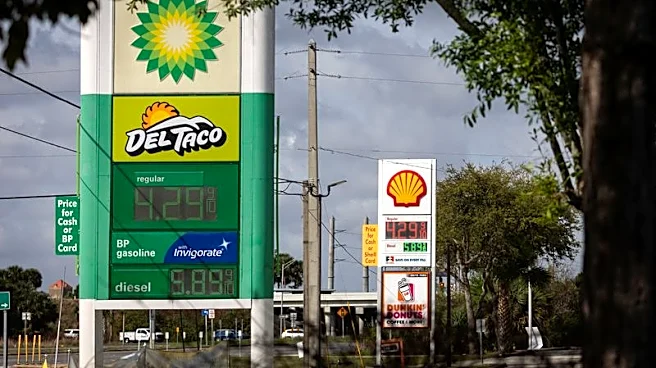
accuses CGEP of deceptive trade practices by not fully disclosing its financial ties to major fossil fuel companies such as ExxonMobil, Shell, and BP. The students argue that CGEP's representation as an independent research body is misleading, given its significant funding from these companies. The complaint highlights concerns that CGEP's research, which influences climate policy, is biased in favor of fossil fuel interests. Columbia University, however, maintains that all funding sources are disclosed and that the thinktank operates independently.
Why It's Important?
This complaint underscores the ongoing debate over the influence of fossil fuel funding on academic research and its implications for climate policy. If the allegations are upheld, it could lead to increased scrutiny of university research centers and their funding sources, potentially impacting how climate-related research is conducted and perceived. The case also highlights the role of student activism in challenging institutional practices and advocating for transparency and integrity in academic research. A ruling against CGEP could set a precedent for other universities, prompting a reevaluation of their funding policies and relationships with the fossil fuel industry.
What's Next?
If the consumer protection bureau finds merit in the complaint, CGEP may be required to amend its claims of independence and unbiased research. This could lead to financial penalties for Columbia University and pressure the institution to reassess its funding policies. The outcome of this case may inspire similar actions at other universities, as student groups and environmental organizations continue to push for greater transparency and accountability in academic research. The broader academic community may also face increased pressure to dissociate from fossil fuel funding, potentially affecting research agendas and collaborations.