
What's Happening?
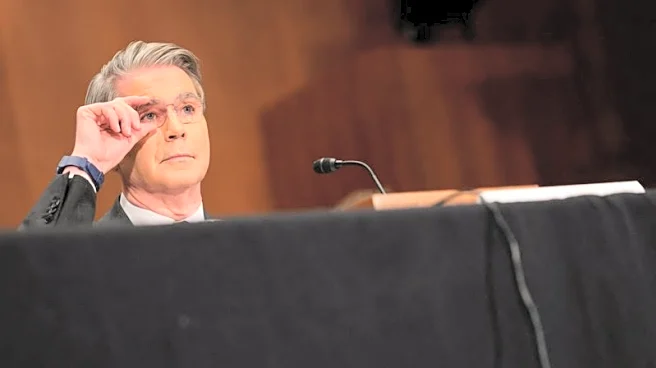
President Trump is reportedly considering Kevin Warsh and Kevin Hassett as potential replacements for Federal Reserve Chair Jerome Powell, whose term is set to end in May. This development comes amid ongoing tensions between the Trump administration and Powell over
interest rate policies. Trump has expressed a preference for lower borrowing costs to stimulate the economy and reduce federal debt interest payments. However, Federal Reserve officials have cautioned that such measures could lead to increased inflation. Betting odds from BetOnline suggest Warsh is the frontrunner, with odds of 1/1, while Hassett has odds of 3/2. Other potential candidates include Christopher Waller, Rick Rieder, Judy Shelton, Scott Bessent, Stephen Miran, and Michelle Bowman. The situation is further complicated by a Department of Justice investigation into Powell's testimony regarding a costly Federal Reserve office renovation project.
Why It's Important?
The potential replacement of Jerome Powell as Federal Reserve Chair could significantly impact U.S. monetary policy and economic stability. The Federal Reserve's interest rate decisions influence borrowing costs, consumer spending, and overall economic growth. A shift in leadership could lead to changes in these policies, affecting various economic stakeholders, including businesses, investors, and consumers. The Trump administration's push for lower interest rates aims to boost economic activity but raises concerns about inflationary pressures. The outcome of this leadership change could also affect the Federal Reserve's independence and its ability to make decisions free from political influence.
What's Next?
President Trump is expected to announce his decision on Powell's replacement in the coming weeks. The selection process will likely involve further scrutiny of the candidates' monetary policy stances and their potential impact on the economy. The Federal Reserve's future direction will depend on the new chair's approach to interest rates and economic challenges. Stakeholders, including financial markets and policymakers, will closely monitor these developments, as they could have far-reaching implications for the U.S. economy.