


What's Happening?
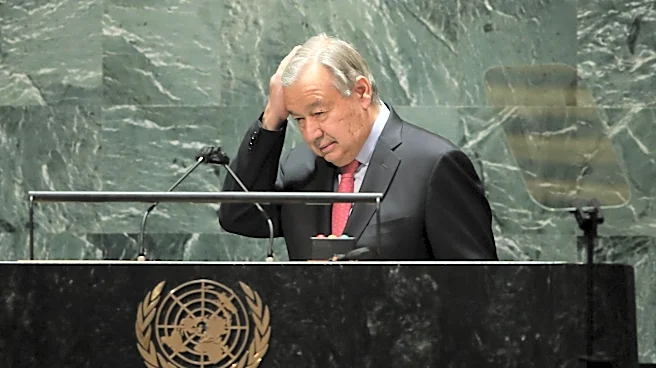
The United Nations emphasizes that political will is crucial for effectively addressing conflict-induced food insecurity and preventing famine. Despite existing international laws and tools, such as Resolution 2417, there is a failure to fully implement
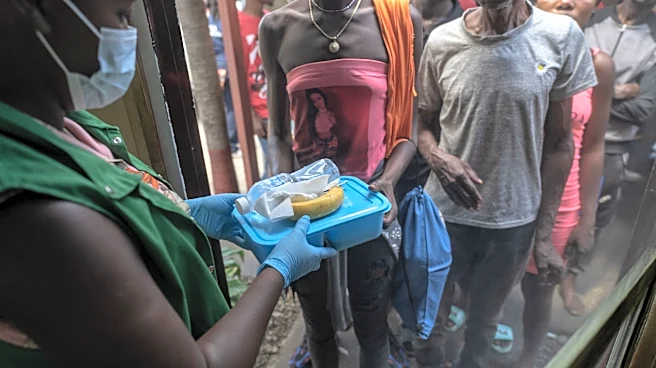
these measures. The World Food Programme (WFP) estimates that at least 266 million people face acute food insecurity, with famine risks identified in Sudan, South Sudan, Yemen, and Somalia, where conditions are expected to worsen. The UN points out that hunger in conflict zones is human-made, with civilians bearing the brunt. The interconnectedness of global food security means conflicts in one region can impact food availability in others, with crises in vital trade routes like the Strait of Hormuz, the Black Sea, and Bab Al-Mandab potentially pushing millions more into acute hunger. The UN calls for swifter and more flexible use of Resolution 2417, including regular OCHA reporting for early warnings and timely action, and suggests that targeted measures against those obstructing humanitarian aid should remain an option.
Why It's Important?
The UN's stance underscores a critical gap between international legal frameworks and their practical application in preventing humanitarian crises. The failure to implement Resolution 2417, which recognizes conflict-induced food insecurity as a threat to international peace and security, highlights a systemic issue in global governance. This inaction directly impacts millions of lives, leading to widespread suffering and instability in already fragile regions. The interconnected nature of global food supply chains means that these localized conflicts have broader implications, potentially disrupting international trade and exacerbating food shortages worldwide. The call for political will is a direct challenge to member states to prioritize humanitarian concerns over political or strategic interests, emphasizing that the tools to prevent famine exist, but the collective resolve to use them is lacking. This situation also raises questions about accountability for those who violate international law by using starvation as a method of warfare.
What's Next?
The UN's continued advocacy will likely focus on pressuring member states to demonstrate greater political will in implementing existing resolutions and international law. This could involve increased diplomatic efforts to facilitate humanitarian access, enforce targeted measures against obstructers of aid, and strengthen early warning systems. There may be renewed calls for more frequent and robust reporting from organizations like OCHA to the Security Council, aiming to trigger earlier interventions before famine conditions are officially declared. Furthermore, discussions around ensuring freedom of navigation in critical trade routes and facilitating fertilizer and food exports as interim relief measures are expected to continue. The effectiveness of these efforts will depend on the willingness of key international actors to overcome political stalemates and prioritize humanitarian action in conflict-affected regions.
Beyond the Headlines
The UN's emphasis on political will delves into the ethical and moral dimensions of international relations, highlighting a collective failure to uphold fundamental human rights. The persistence of conflict-induced hunger, despite clear international prohibitions against starving civilians, points to a deeper issue of impunity and a lack of accountability for those who perpetuate such atrocities. This situation also exposes the limitations of international law when not backed by strong political commitment and enforcement mechanisms. The interconnectedness of global food security means that these humanitarian crises are not isolated events but can have ripple effects on global stability, migration patterns, and economic markets. Addressing this requires not just humanitarian aid but also a concerted effort to resolve underlying conflicts and promote sustainable peace, recognizing that food security is intrinsically linked to peace and security.