


What's Happening?
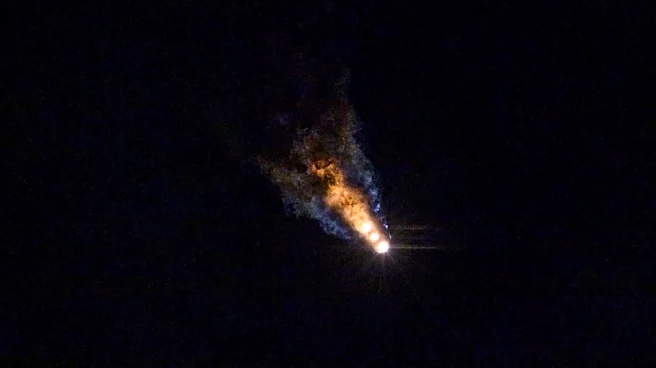
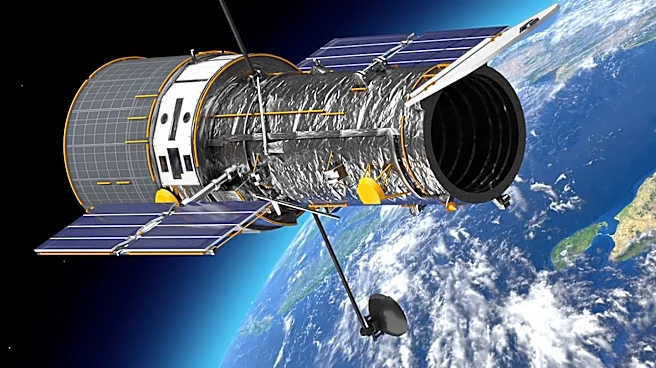
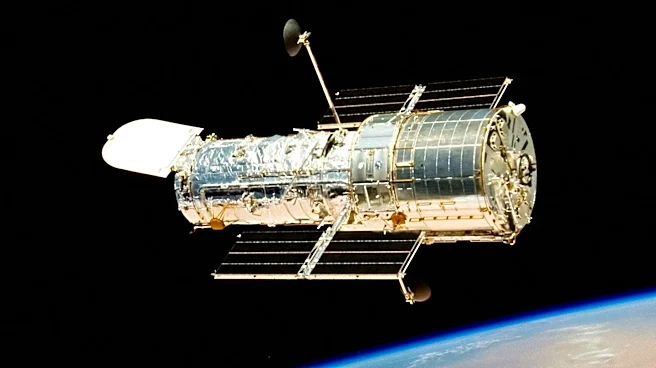
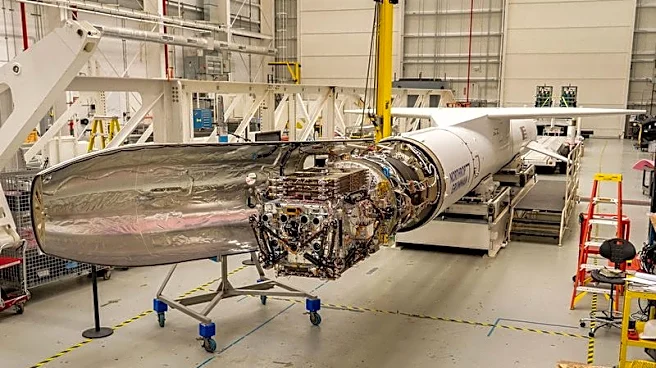
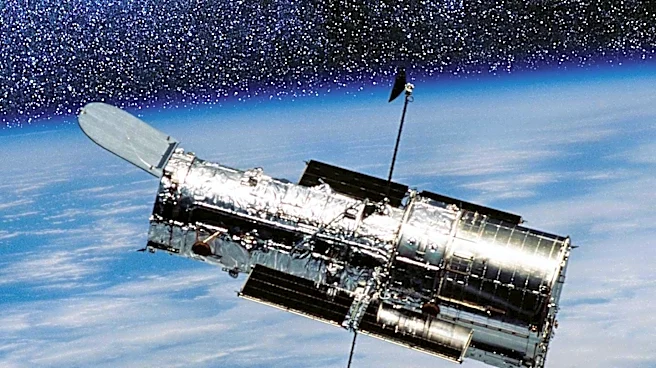
NASA has announced that the Hubble Space Telescope is projected to fall from orbit and re-enter Earth's atmosphere by the mid-2030s. This follows the recent re-entry of NASA’s Swift Observatory on Wednesday, which had exceeded its two-year mission projection
by lasting 11 times longer than planned. The agency is currently exploring the feasibility of a 'rescue mission' to push the Hubble Space Telescope further into space, thereby extending its operational life. The Swift Observatory's re-entry occurred after unsuccessful attempts to correct its sinking orbit. This development highlights the challenges of maintaining long-term space assets and the eventual fate of orbiting telescopes.
Why It's Important?
The potential loss of the Hubble Space Telescope by the mid-2030s carries significant implications for space research and astronomy. Hubble has been instrumental in numerous groundbreaking discoveries, providing unparalleled images and data that have reshaped our understanding of the universe. Its continued operation is crucial for ongoing scientific investigations, including studies of distant galaxies, exoplanets, and the expansion of the universe. A 'rescue mission' would represent a substantial engineering and financial undertaking, but it could preserve a vital scientific instrument. The alternative, allowing it to re-enter, would mean the end of an era for one of humanity's most successful scientific endeavors, impacting future astronomical research until a successor can fully take its place.
What's Next?
NASA is actively gauging interest in a potential 'rescue mission' for the Hubble Space Telescope. This suggests that discussions and feasibility studies are underway to determine the technical and logistical requirements, as well as the financial investment needed, to extend Hubble's operational lifespan. The outcome of these considerations will dictate whether efforts are made to re-boost the telescope or if plans will focus on managing its eventual re-entry. The decision will likely involve collaboration with international partners and private space companies, given the complexity and cost of such an endeavor. Further announcements from NASA are expected as they assess the viability of a rescue mission.
Beyond the Headlines
The impending re-entry of the Hubble Space Telescope underscores broader issues concerning space debris and the long-term sustainability of space exploration. As more satellites and observatories are launched, the problem of defunct spacecraft eventually falling back to Earth becomes more pressing. This situation could prompt increased focus on de-orbiting technologies or active debris removal strategies for future missions. Furthermore, it highlights the finite lifespan of even the most advanced technological marvels and the continuous need for innovation and investment in new space-based observatories to ensure the continuity of scientific discovery. The 'rescue mission' concept also raises questions about the value placed on preserving historical scientific assets versus investing in new ones.