







What's Happening?
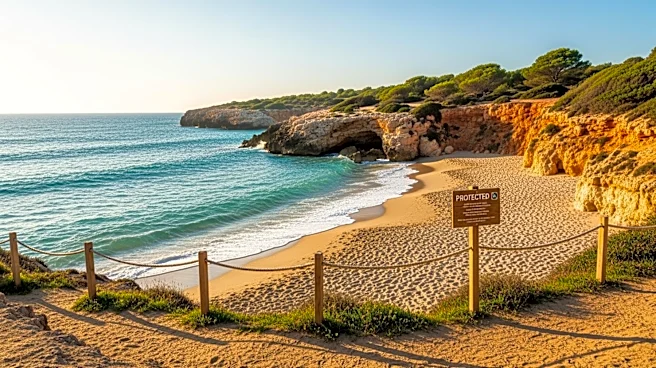
Greece has introduced new regulations to protect 251 of its beaches from the adverse effects of overtourism. These beaches are now part of the Natura 2000 network, a European initiative aimed at preserving vital ecosystems and rare wildlife. The new rules
prohibit activities such as the rental of sun loungers and umbrellas, the use of loudspeakers, and the operation of beach bars and commercial concessions. Additionally, organized sporting events and gatherings of more than ten people are banned, as are any constructions that could alter the natural shoreline. This initiative began in 2024 and has steadily expanded, reflecting a commitment to maintaining the natural beauty and biodiversity of these coastal areas.
Why It's Important?
The measures taken by Greece are significant as they address the growing issue of overtourism, which has been a concern for many popular tourist destinations. By implementing these restrictions, Greece aims to preserve its natural landscapes and protect the habitats of threatened species such as the loggerhead sea turtles and Mediterranean monk seals. This approach not only safeguards the environment but also ensures that the unique appeal of these beaches is maintained for future generations. The initiative aligns with broader European goals for environmental resilience and highlights the importance of sustainable tourism practices.
What's Next?
As Greece continues to enforce these regulations, the focus will likely shift towards monitoring compliance and assessing the impact of these measures on both the environment and the tourism industry. The success of this initiative could serve as a model for other countries facing similar challenges with overtourism. Additionally, there may be discussions on how to balance economic interests with environmental preservation, as tourism is a significant source of income for Greece. The response from tourists and local businesses will be crucial in determining the long-term viability of these measures.