





What's Happening?
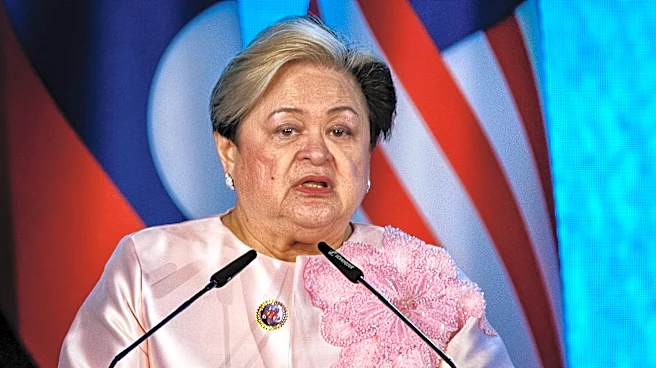
Philippine Foreign Secretary Theresa Lazaro has arrived in Myanmar to lead a humanitarian aid distribution mission. This visit is part of her role as Special Envoy on Myanmar for ASEAN, the Association of Southeast Asian Nations. The mission aims to deliver
50-kilogram bags of rice, personal hygiene kits, and other essential items to over 11,000 households across Kayin State, Southern Shan State, and Northern Shan State through November. Myanmar has been facing a severe humanitarian crisis since the military coup in February 2021, which ousted the elected government of Aung San Suu Kyi and plunged the country into civil war, displacing millions. The military-backed government, led by President Min Aung Hlaing, is seeking to improve its international image and gain political legitimacy, especially within ASEAN, which has previously rebuked Myanmar for its failure to comply with a 2021 peace plan. This aid operation is a significant step in addressing the widespread needs of the affected population.
Why It's Important?
This humanitarian mission is important as it represents a concerted effort by ASEAN to address the dire humanitarian situation in Myanmar, which has seen 21.9 million people in need of assistance in 2026, according to Action Contre la Faim. The involvement of a top diplomat from a key ASEAN member like the Philippines underscores the regional bloc's commitment to finding solutions, despite ongoing political complexities. The aid distribution will directly benefit thousands of households struggling with displacement, economic deterioration, and limited access to basic services. For the military-backed government, this mission offers a potential avenue to improve its international standing and alleviate some of the pressure from Western nations that have imposed sanctions. However, the effectiveness of such missions in fostering long-term stability and addressing the root causes of the crisis remains a critical concern, especially given the continued detention of political prisoners and the military's grip on power.
What's Next?
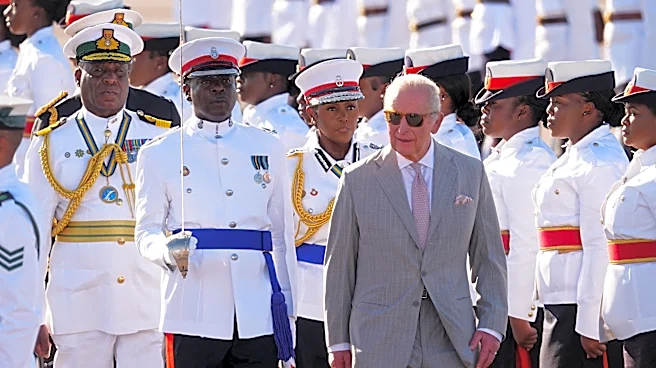
The humanitarian aid distribution is scheduled to continue through November, with the ASEAN Monitoring Team overseeing the process. Following this mission, ASEAN will hold its annual summit in mid-November in Manila, where Myanmar's ongoing crisis and its compliance with the bloc's peace plan will likely be key discussion points. President Min Aung Hlaing's efforts to end diplomatic isolation are expected to continue, potentially involving further engagements with regional leaders. The international community, including humanitarian organizations, will closely monitor the impact of this aid and the military government's willingness to facilitate broader humanitarian access and political dialogue. The situation of Aung San Suu Kyi, who recently had her first telephone call with her son in over five years and received books from Britain's King Charles III, will also remain a point of international interest, as her status is often seen as a barometer of the regime's intentions.
Beyond the Headlines
Beyond the immediate humanitarian relief, this mission highlights the delicate balance ASEAN members are attempting to strike between diplomatic engagement and upholding democratic principles. While the aid provides crucial support to suffering populations, it also inadvertently offers a degree of legitimacy to the military-backed government, which is actively seeking to normalize its international relations. The underlying economic model, protected by military rule for decades, has led to widespread poverty and financial instability, with 16.4 million people living below the national poverty line. The crisis also has broader implications for regional stability, as mass displacement and economic deterioration can spill over into neighboring countries. The long-term solution requires not just humanitarian aid but also a fundamental shift in governance, addressing human rights, and fostering genuine political reconciliation, which remains a significant challenge given the current political landscape.