
What's Happening?
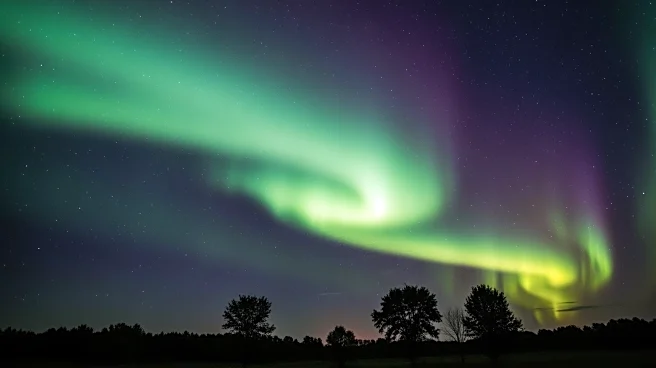
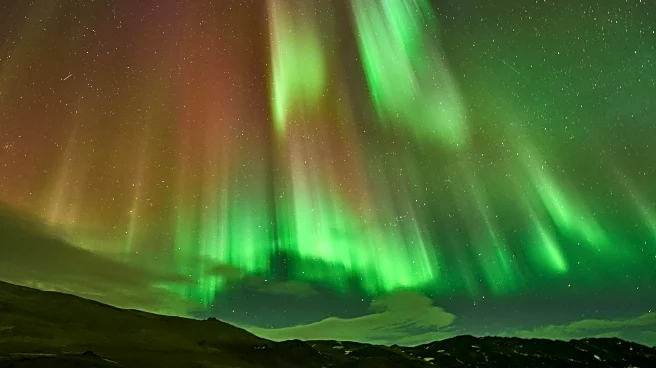
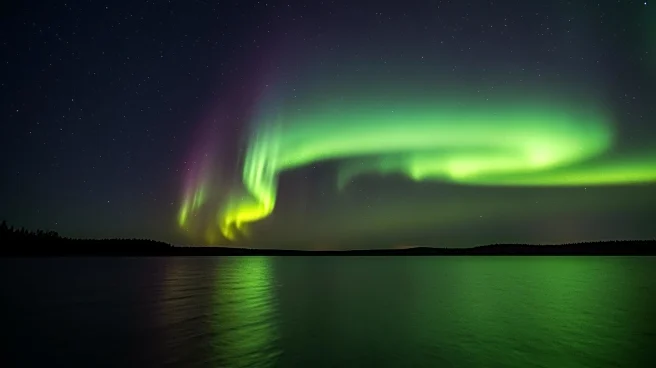
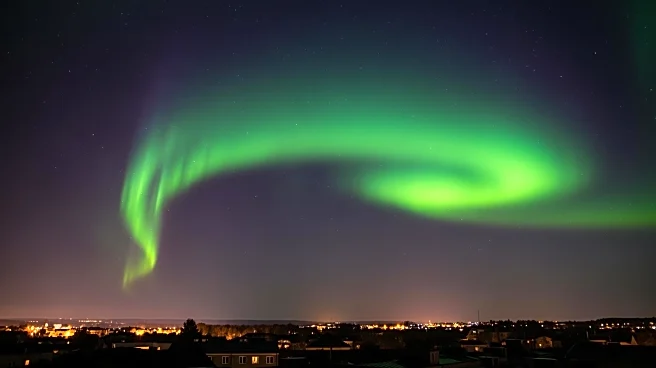
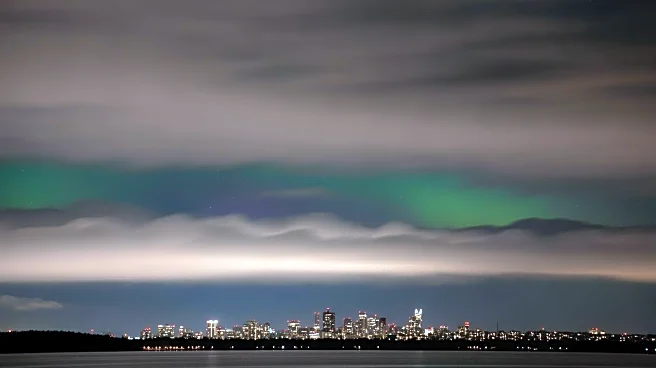
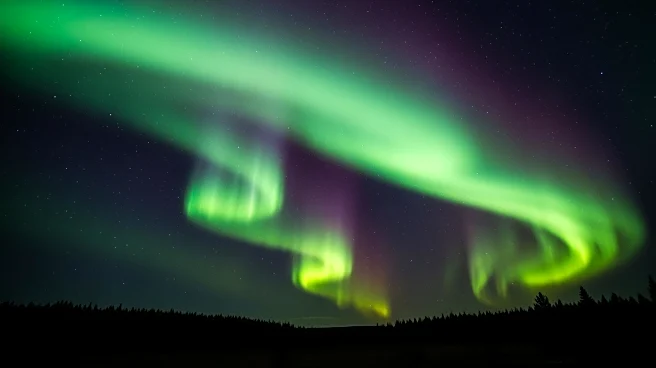
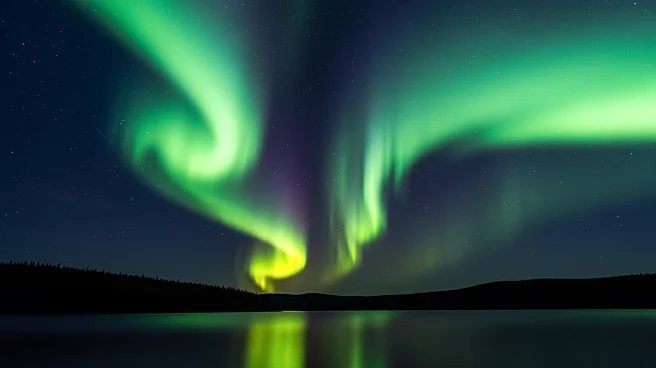
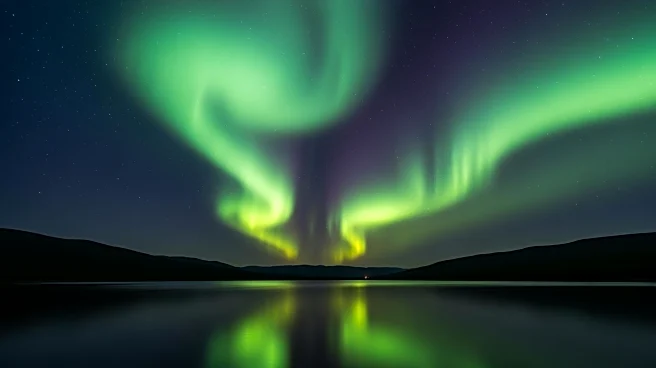
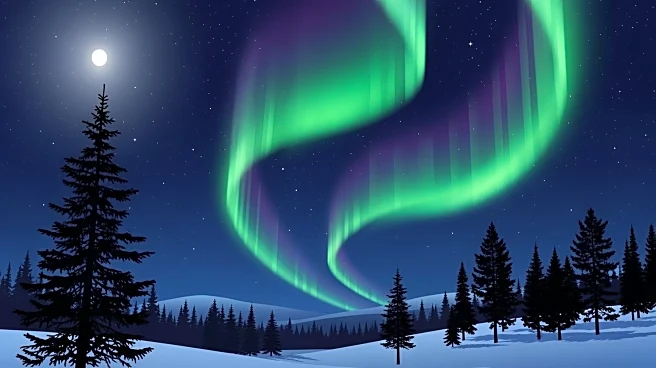
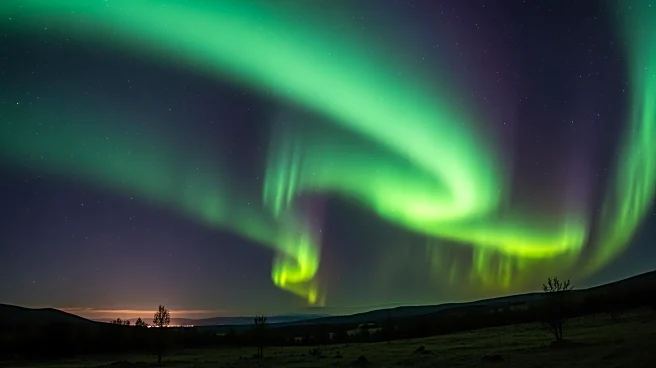
The northern lights, also known as the aurora borealis, are expected to be visible across approximately 20 U.S. states due to increased geomagnetic activity. This phenomenon is linked to the upcoming spring equinox on March 20, which creates conditions
known as the 'equinox effect.' This effect occurs when the Earth's magnetic field aligns with solar winds, allowing charged particles to penetrate and intensify auroral displays. The National Oceanic and Atmospheric Administration's Space Weather Prediction Center forecasts that the lights will be visible from late March 18 into the early hours of March 19. The geomagnetic storm could reach levels that make the auroras visible as far south as Illinois and Oregon. The best viewing times are expected between 10 p.m. and 2 a.m. local time, although this can vary based on location and weather conditions.
Why It's Important?
The visibility of the northern lights in such a wide range of U.S. states is a rare event, typically confined to more northern latitudes. This occurrence provides a unique opportunity for millions of Americans to witness a natural phenomenon that is usually out of reach. The event highlights the dynamic interactions between solar activity and Earth's magnetic field, offering educational insights into space weather and its effects on our planet. Additionally, the increased visibility of the auroras can boost local tourism in areas where the lights are expected to be visible, potentially benefiting local economies. The event also underscores the importance of monitoring space weather, as geomagnetic storms can have broader implications for satellite operations and power grids.
What's Next?
As the geomagnetic storm progresses, further updates and forecasts will be provided by NOAA's Aurora Dashboard. Observers are encouraged to find dark, unobstructed viewing locations away from city lights to maximize their chances of seeing the auroras. The event may prompt increased interest in space weather phenomena and could lead to more public engagement with scientific communities focused on studying these interactions. Additionally, the occurrence may lead to discussions on the potential impacts of geomagnetic storms on technology and infrastructure, emphasizing the need for preparedness in mitigating any adverse effects.