





What's Happening?
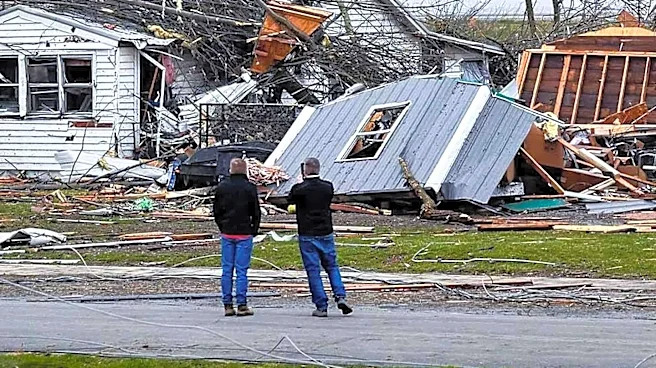
Clean-up efforts are underway in Metro Detroit following a tornado and severe storms that struck the region on Thursday. Detroit Mayor Mary Sheffield declared a local state of emergency due to the significant devastation, particularly on the city's east
side. The National Weather Service confirmed that Detroit experienced its first tornado in nearly 30 years. Gabriel Richard Park, located along the riverfront, suffered extensive damage, with the Detroit Riverfront Conservancy reporting the loss of over 20 old-growth trees. Residents are being asked to avoid the park's grassy areas while restoration is in progress. The storms also caused widespread power outages, damaged buildings, and impacted traffic signals. City officials reported that 100 traffic signals were initially affected, with crews working to restore them using generators and placing temporary stop signs. By Friday afternoon, the number of affected signals had been reduced to 48. Communities outside Detroit, such as Dearborn and Allen Park, also experienced severe weather, though not all saw the same level of destruction. In Hamtramck, a tree fell on a transformer, causing localized power issues, which were largely resolved by Friday.
Why It's Important?
The rare occurrence of a tornado in Detroit, the first in nearly three decades, highlights the increasing unpredictability of severe weather patterns and their potential impact on urban infrastructure and daily life. The declaration of a local state of emergency underscores the severity of the damage and the need for coordinated recovery efforts, which will likely involve significant financial and logistical resources from local and state governments. The extensive damage to public spaces like Gabriel Richard Park not only affects recreational opportunities but also has ecological implications due to the loss of mature trees. For residents, the power outages and non-functioning traffic signals create immediate safety hazards and disrupt commutes, impacting productivity and local commerce. The incident also serves as a critical reminder for municipalities to review and update their emergency preparedness and response protocols for extreme weather events, especially in areas not traditionally prone to tornadoes. The long-term recovery will require substantial investment in infrastructure repair and potentially in climate resilience measures.
What's Next?
Cleanup operations are expected to continue for several weeks, particularly in areas like Gabriel Richard Park, where extensive tree loss requires significant restoration efforts. City officials will prioritize the full restoration of all traffic signals and power to affected areas, with ongoing efforts to reduce the number of non-functioning signals. Residents are urged to continue treating non-functioning traffic lights as four-way stops to ensure safety. Authorities will likely conduct further assessments of the damage to determine the full scope of repairs needed for public and private property. There may be discussions about long-term strategies for urban tree management and infrastructure hardening to better withstand future severe weather events. The National Weather Service will continue to monitor weather patterns, as there is a possibility of more severe weather in the coming days, which could further complicate recovery efforts and necessitate additional public advisories and safety measures.
Beyond the Headlines
The Detroit tornado event could prompt a broader re-evaluation of urban planning and infrastructure resilience in cities not typically associated with tornado activity. The loss of numerous old-growth trees in Gabriel Richard Park highlights the vulnerability of urban green spaces to extreme weather and the long-term ecological and aesthetic impacts. This incident may also spark conversations about climate change adaptation strategies at the local level, encouraging investments in more robust infrastructure and early warning systems. The disruption to daily life, from power outages to traffic signal failures, underscores the interconnectedness of urban systems and the cascading effects of severe weather. Furthermore, the community's response, including residents' observations and the efforts of city crews, reflects the collective resilience and challenges faced during such events. The rarity of this tornado in Detroit could serve as a case study for other urban centers to prepare for unexpected weather phenomena, emphasizing the need for flexible and comprehensive disaster preparedness plans.