









What's Happening?
In 2025, the United States achieved a new record in total energy production, reaching 107 quadrillion British thermal units (quads), according to the U.S. Energy Information Administration's Monthly Energy Review. This marks a 3.4% increase over the previous
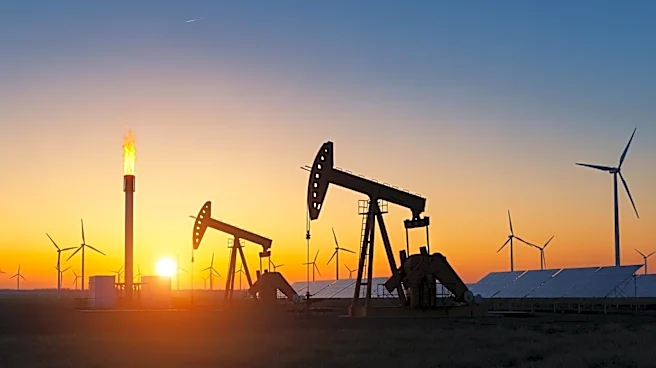
record set in 2024. The record was driven by simultaneous peaks in production across natural gas, crude oil, natural gas plant liquids, and renewables. This broad-based growth reflects a sustained upward trend in the U.S. energy sector, with each of these categories reaching record-high production levels. Notably, renewable energy's growth alongside fossil fuels contributed significantly to this milestone. The U.S. also saw record energy exports of 31 quads, while imports decreased by 5% to 21 quads, resulting in a net export record of 11 quads.
Why It's Important?
The record-setting energy production in 2025 underscores the United States' position as a leading energy producer and exporter. The simultaneous growth in both fossil fuels and renewables indicates a diversified energy strategy that supports both domestic consumption and international trade. This development is crucial for energy security and economic stability, as it reduces reliance on energy imports and strengthens the U.S.'s role in global energy markets. The increase in renewable energy production also aligns with broader environmental goals and the transition towards cleaner energy sources. The expansion of infrastructure, such as new natural gas pipelines, further supports this growth and indicates continued investment in the energy sector.
What's Next?
Looking ahead, the U.S. energy sector is poised for further growth, with plans to add approximately 44.9 billion cubic feet per day of new natural gas pipeline capacity by 2027. This expansion is expected to support rising industrial natural gas consumption, which is projected to continue setting records. The sustained demand for natural gas and the ongoing development of renewable energy sources suggest that the U.S. may continue to break production records in the coming years. However, this will depend on market conditions, infrastructure progress, and shifts in energy demand across different categories.