








What's Happening?
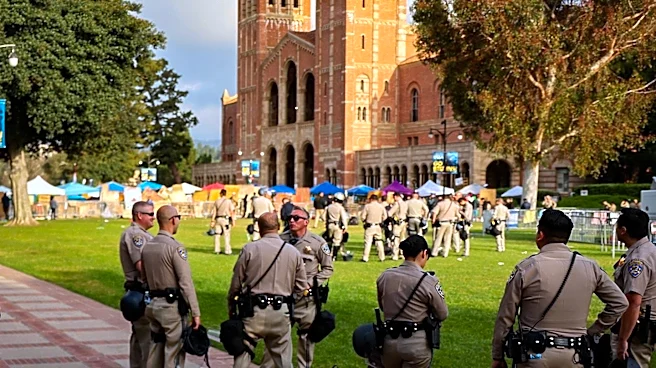
A recent report on Special Weapons and Tactics (SWAT) operations across the United States from July 9 to July 17, 2026, reveals critical insights into the challenges faced by law enforcement agencies. The report highlights the simultaneous deployment
of specialized tactical units in multiple locations, underscoring vulnerabilities in metropolitan response capabilities due to resource depletion. SWAT operations require significant manpower, specialized vehicles, and dedicated communications networks. The report also notes the reliance on mutual aid agreements during concurrent crises and emphasizes the need for deep rosters of tactical personnel and interoperable radio systems to prevent command and control failures.
Why It's Important?
The findings of the report are crucial for understanding the operational challenges faced by law enforcement agencies in the U.S. The strain on resources during simultaneous SWAT deployments can lead to potential gaps in response capabilities, affecting public safety and the ability to manage crises effectively. The report underscores the importance of interagency cooperation and the need for robust resource allocation to ensure readiness for multiple, concurrent incidents. This has implications for public policy and funding decisions related to law enforcement and emergency response infrastructure.
What's Next?
The report suggests that law enforcement agencies may need to reassess their resource allocation and mutual aid agreements to better prepare for simultaneous crises. There may be calls for increased funding and support for SWAT and other specialized units to enhance their operational capabilities. Additionally, the development of interoperable communication systems and the expansion of tactical personnel rosters could be prioritized to address the identified vulnerabilities.