







What's Happening?
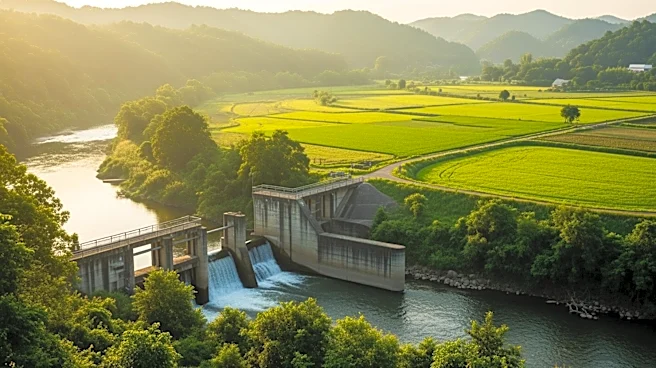
A study by Oregon State University has revealed that the largest dam removal project in U.S. history on the Klamath River has fostered collaboration between agricultural producers and conservation groups. The removal of four hydropower dams, completed
between 2023 and 2024, aimed to restore salmon habitats and improve water quality. The study found that both farmers and conservationists share common priorities, such as the need for better collaboration, an ecosystem-based approach to river restoration, and a willingness to explore nontraditional management options. These findings suggest that despite historical conflicts, there is potential for cooperative management of the Klamath Basin's resources.
Why It's Important?
The collaboration between agricultural and conservation groups in the Klamath Basin is significant as it demonstrates the potential for resolving long-standing water conflicts through shared priorities and mutual understanding. This cooperative approach could serve as a model for other regions facing similar challenges, particularly as the U.S. continues to address aging infrastructure and environmental restoration. The study highlights the importance of integrating diverse stakeholder perspectives to achieve sustainable management of natural resources, which is increasingly critical in the face of climate change and its impacts on water availability and ecosystem health.
What's Next?
As the Klamath River restoration progresses, ongoing dialogue and collaboration between stakeholders will be essential to ensure the success of the project. The study's findings could inform future river restoration efforts, encouraging similar cooperative approaches in other regions. Additionally, the focus on nontraditional management options, such as ecotourism, could provide new economic opportunities for local communities while preserving natural resources. Continued research and monitoring will be necessary to assess the long-term impacts of the dam removal and to refine management strategies that balance ecological and economic interests.