






What's Happening?
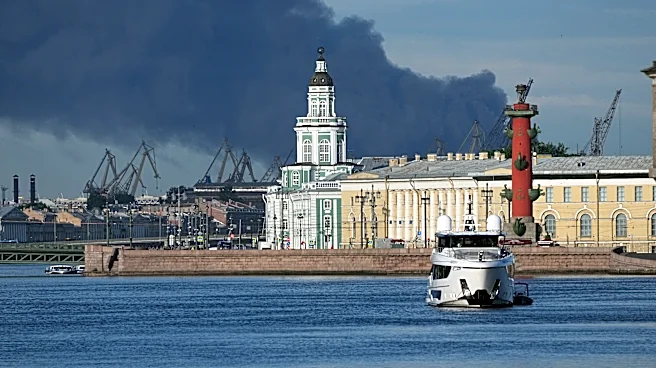
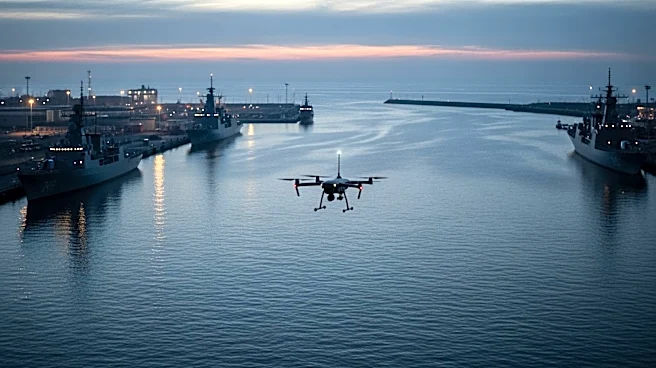
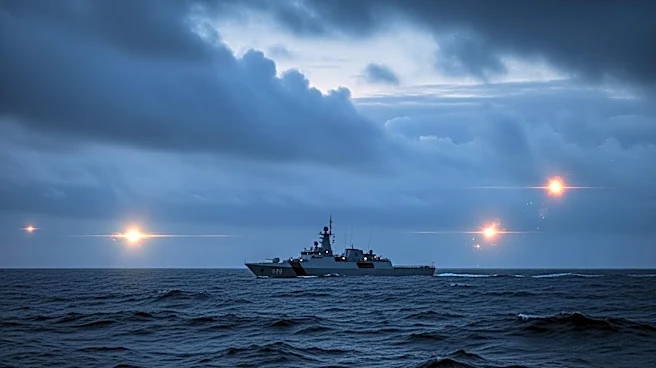
Ukrainian forces have conducted a series of strikes on St. Petersburg, targeting key military and industrial sites during the St. Petersburg International Economic Forum (SPIEF). The strikes hit the Kronstadt Naval Base, oil depots, and military arsenals,
demonstrating Ukraine's ability to reach deep into Russian territory. These actions coincide with Russia's efforts to project stability and economic strength during SPIEF, a major international event. The strikes have exposed vulnerabilities in Russia's air defense systems, as Ukrainian drones managed to penetrate defenses and cause significant damage.
Why It's Important?
The Ukrainian strikes on St. Petersburg represent a significant escalation in the conflict, challenging Russia's ability to protect its major cities and strategic assets. This development undermines the Kremlin's narrative of stability and control, particularly during high-profile events like SPIEF. The strikes also highlight the effectiveness of Ukraine's long-range capabilities, which could shift the balance of power in the conflict. The international community is likely to view these actions as a bold statement of Ukraine's resilience and determination to counter Russian aggression.
What's Next?
In response to the strikes, Russia may intensify its military operations and enhance its air defense systems to prevent future incursions. The Kremlin is likely to reassess its strategic priorities, potentially reallocating resources to bolster defenses around key cities. Ukraine, on the other hand, may continue to leverage its long-range capabilities to target critical Russian infrastructure, aiming to disrupt military operations and weaken Russia's strategic position. The ongoing conflict is expected to draw continued international attention, with potential implications for global security and diplomatic relations.