
What's Happening?
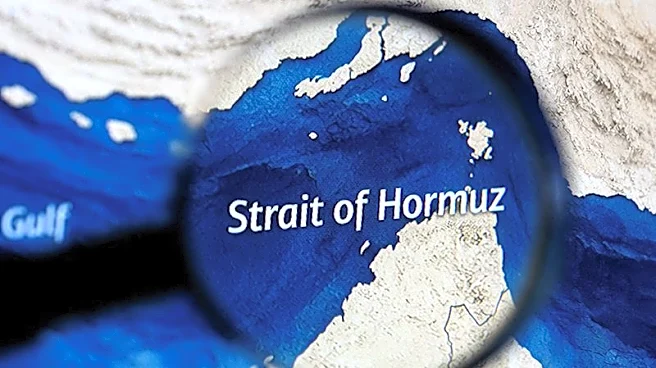
Oil prices fluctuated as President Trump issued a new ultimatum to Iran, demanding the reopening of the Strait of Hormuz. The U.S., Iran, and regional mediators have been negotiating a potential 45-day
ceasefire to end the ongoing conflict, but Iran rejected the proposal. President Trump has threatened military action if Iran does not comply by the set deadline. The situation has caused significant disruptions in global oil supply, with an estimated loss of 1 billion barrels by the end of the month. The International Energy Agency has released 400 million barrels from its reserves to mitigate the impact, but experts warn that the reserves are insufficient to cover the shortfall.
Why It's Important?
The closure of the Strait of Hormuz, a critical maritime route for global oil supply, has significant implications for the global economy. The disruption has led to increased oil prices, affecting industries and consumers worldwide. The potential for military escalation raises concerns about further instability in the Middle East, which could have long-term impacts on global energy markets and geopolitical relations. The situation also highlights the vulnerability of global supply chains to geopolitical tensions.
What's Next?
If Iran does not reopen the strait, President Trump has indicated that the U.S. will take military action, targeting key infrastructure in Iran. This could lead to a significant escalation in the conflict, with potential retaliatory actions from Iran. The international community is closely monitoring the situation, with diplomatic efforts ongoing to prevent further escalation. The outcome of these negotiations will be crucial in determining the future stability of the region and the global energy market.