







What's Happening?
Information and Communications Technology Minister Shadric Namalomba of Malawi has urged the global community to ensure that artificial intelligence (AI) serves humanity, warning that without deliberate action, the technology could exacerbate existing
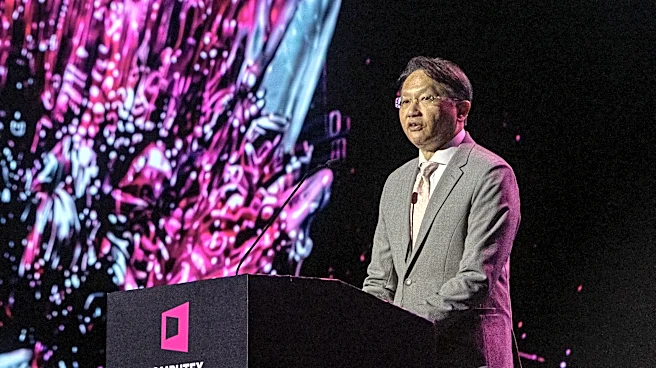
inequalities. Speaking at the 2026 World Internet Conference in Wuzhen, China, Minister Namalomba emphasized that the true measure of AI's success lies not in its advancement, but in its ability to transform the lives of vulnerable populations, including women, youth, farmers, and persons with disabilities. He highlighted Malawi's progress in digital infrastructure, supported by partnerships with the Chinese Government and Huawei, while acknowledging persistent challenges. World Internet Conference Chairperson Zhuang Rongwen, also Minister of Cyberspace Administration of the People’s Republic of China, underscored the conference's importance for global technology development.
Why It's Important?
Minister Namalomba's call is significant as it places a strong emphasis on the ethical and social dimensions of AI development, moving beyond purely technological considerations. His warning about AI widening socioeconomic gaps resonates globally, particularly in developing nations where access to technology and digital literacy are already uneven. By advocating for AI that benefits the most vulnerable, Malawi is pushing for a more inclusive and equitable future in the digital age. This perspective challenges the prevailing narrative that often prioritizes innovation and economic growth without adequately addressing potential societal harms. The involvement of the Chinese Government and Huawei in Malawi's digital infrastructure also highlights the growing influence of global powers in shaping technological landscapes in Africa, raising questions about data sovereignty and technological dependence.
What's Next?
Following Minister Namalomba's address, the global community, particularly participants of the World Internet Conference, will likely engage in further discussions on how to implement human-centric AI policies. This could lead to international collaborations aimed at developing ethical AI frameworks, promoting digital literacy, and ensuring equitable access to AI technologies. Malawi, with its stated commitment, may seek to strengthen its partnerships and attract further investment in digital infrastructure that aligns with its vision of inclusive AI. The ongoing dialogue will also involve balancing the rapid pace of AI development with the need for careful consideration of its societal impacts, potentially influencing future international agreements and national AI strategies. The emphasis on vulnerable groups suggests a potential shift in focus for AI initiatives, prioritizing social good alongside technological advancement.
Beyond the Headlines
The discourse around AI serving humanity delves into profound ethical and philosophical questions about the role of technology in society. Minister Namalomba's remarks implicitly challenge the notion of technological determinism, asserting that human agency and deliberate policy choices can steer AI towards beneficial outcomes. The concern about widening inequalities highlights the potential for AI to exacerbate existing power imbalances, creating a digital divide between those who can leverage AI for advancement and those who are left behind. This also brings to light the importance of digital education and skill development in preparing populations for an AI-driven future. Furthermore, the collaboration with China and Huawei in Malawi's digital infrastructure raises questions about the geopolitical implications of technological partnerships, including standards setting, data governance, and the potential for technological dependencies. The call for AI to serve humanity is not just a moral imperative but also a strategic one, aiming to prevent social unrest and ensure broad-based prosperity in the age of artificial intelligence.