
What's Happening?
President Trump is facing significant challenges in managing the ongoing conflict with Iran, as highlighted by recent tensions with Israeli Prime Minister Benjamin Netanyahu. The conflict, which began
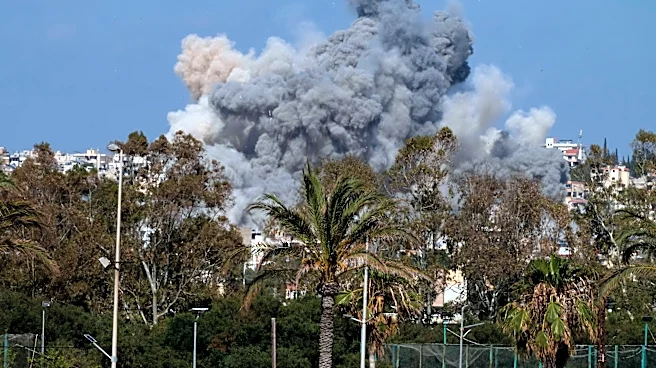
as a demonstration of U.S.-Israeli military cooperation, has evolved into a complex geopolitical issue. Trump reportedly criticized Netanyahu for considering strikes on Beirut, which could jeopardize American negotiations with Iran. Despite a ceasefire, the situation remains unstable, with Iran leveraging its strategic position in the Gulf. The U.S. and Iran are far from reaching a lasting settlement, with current negotiations focusing on economic compensation and the lifting of blockades, while nuclear issues remain unresolved.
Why It's Important?
The ongoing conflict with Iran has significant implications for U.S. foreign policy and regional stability in the Middle East. The inability to reach a comprehensive nuclear deal with Iran could lead to intermittent violence, affecting global oil markets and international relations. The U.S.'s strategic interests in the Gulf are at stake, with Iran's ability to close the Strait of Hormuz posing a threat to global oil supply. The situation also impacts U.S.-Israel relations, as differing approaches to Iran could strain diplomatic ties. The conflict's resolution, or lack thereof, will influence U.S. political dynamics, especially with upcoming elections.
What's Next?
Future developments will likely involve continued negotiations between the U.S. and Iran, with potential for further military escalations. The U.S. may need to balance its diplomatic efforts with military readiness, as Iran's strategic maneuvers in the Gulf continue. Israel's response to Iran's actions will also be crucial, as it may take preventive measures against Iran's military capabilities. The U.S. administration will need to navigate these complexities while maintaining regional alliances and addressing domestic political pressures.