






What's Happening?
The U.S. Coast Guard successfully rescued three individuals from a disabled vessel approximately 100 nautical miles southwest of Cabo San Lucas, Mexico. The rescue operation was initiated after the Coast Guard Sector San Diego Joint Rescue Coordination
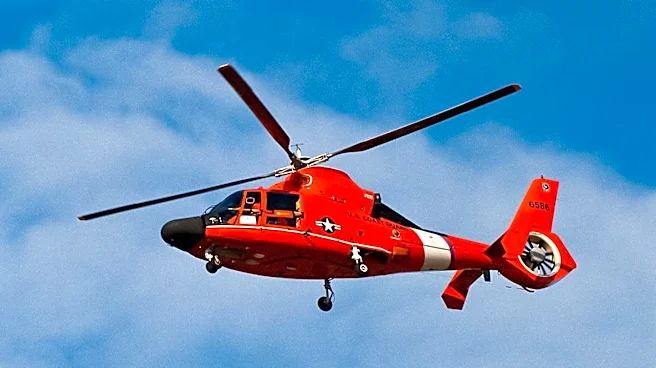
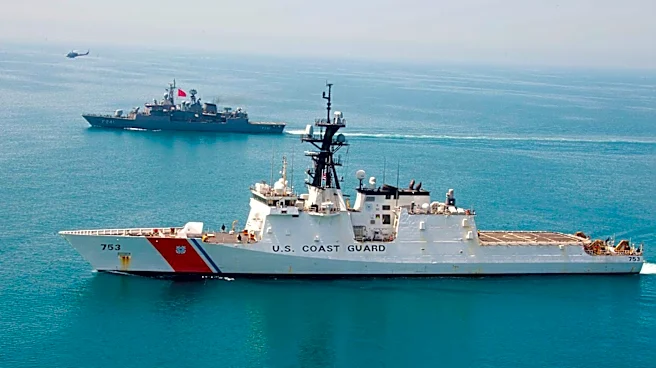
Center received an alert from the International Emergency Response Coordination Center regarding an unregistered distress beacon. The beacon was activated by a 40-foot sailing vessel named 'Ocean Bound' with three people aboard. A Coast Guard Air Station Sacramento C-27 Spartan aircrew was dispatched to the location, followed by the Coast Guard Cutter Robert Ward. Upon arrival, the Robert Ward crew provided food, water, and medical assistance to the individuals. The three rescued individuals were subsequently transferred to the Mexican Navy in accordance with international agreements.
Why It's Important?
This incident highlights the critical role of international cooperation in maritime search and rescue operations. The swift response by the U.S. Coast Guard, triggered by an unregistered distress beacon, underscores the importance of robust emergency communication systems and the readiness of rescue assets. The seamless transfer of the rescued individuals to the Mexican Navy demonstrates effective bilateral agreements between the U.S. and Mexico for handling such emergencies in shared maritime zones. This collaboration ensures that individuals in distress at sea, regardless of their location within international waters, receive timely assistance, thereby enhancing safety and security in the region. The incident also serves as a reminder of the inherent dangers of maritime travel and the necessity for vessels to be equipped with reliable distress signaling devices.
What's Next?
Following the transfer of the rescued individuals to the Mexican Navy, standard procedures for debriefing and medical evaluation will likely be conducted by Mexican authorities. The U.S. Coast Guard will continue its routine patrols and readiness operations in the region, maintaining its commitment to maritime safety and security. This successful rescue may also prompt a review of the incident to identify any lessons learned that could further improve future search and rescue protocols and international coordination efforts. The 'Ocean Bound' vessel, if salvageable, will be subject to assessment by Mexican authorities, who will determine its fate and any necessary actions regarding its recovery or disposal.
Beyond the Headlines
The rescue operation, while seemingly routine, touches upon broader themes of maritime governance and the unwritten laws of the sea. The principle of rendering assistance to those in distress is a cornerstone of international maritime law, transcending national borders and political differences. This event reinforces the idea that the vastness of the ocean necessitates a collective responsibility for safety. Furthermore, the use of an unregistered distress beacon raises questions about compliance with maritime regulations and the potential risks associated with non-registration. While the outcome was positive in this instance, it underscores the importance of proper registration and maintenance of safety equipment to ensure that distress signals are accurately identified and responded to efficiently, ultimately contributing to a safer global maritime environment.