







What's Happening?
A recent Democratic primary in Texas saw Maureen Galindo, a candidate known for her antisemitic rhetoric, receive 36% of the vote despite her defeat. Galindo's campaign included inflammatory statements against American Zionists and conspiratorial claims
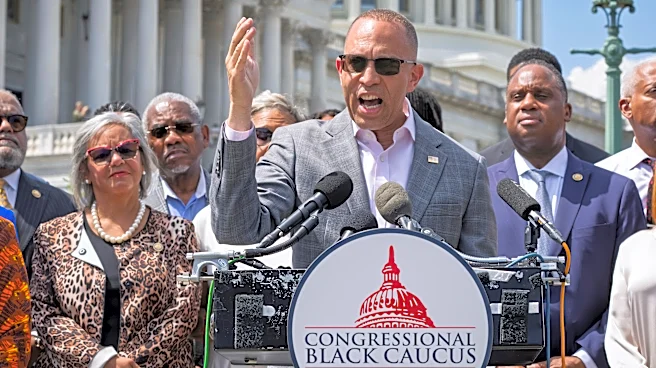
about Israel. The Democratic leadership, including House Minority Leader Hakeem Jeffries and Alexandria Ocasio-Cortez, condemned her rhetoric. The situation highlights a broader issue where antisemitic rhetoric is becoming more normalized in political discourse. This trend is not isolated to Galindo, as similar sentiments have been observed in other political figures across the spectrum.
Why It's Important?
The normalization of antisemitic rhetoric poses significant risks to the political landscape in the U.S. It reflects a shift where prejudiced views are increasingly tolerated, potentially influencing voter behavior and party dynamics. This trend could alienate Jewish communities and other minority groups, undermining efforts to build inclusive political coalitions. The reluctance of some political figures to denounce such rhetoric may embolden fringe elements, leading to further polarization and division within parties. The situation calls for a reevaluation of how political parties address and counteract hate speech within their ranks.
What's Next?
The Democratic Party faces pressure to address the growing acceptance of antisemitic rhetoric among its members. This may involve stronger condemnations and clearer policies to prevent such views from gaining traction. Political leaders may need to engage in more robust dialogue with Jewish communities and other minority groups to rebuild trust and demonstrate a commitment to combating hate speech. The outcome of future elections could hinge on how effectively parties manage these internal challenges and present a unified stance against discrimination.
Beyond the Headlines
The issue of antisemitism in politics extends beyond immediate electoral concerns, touching on deeper societal challenges. It raises questions about the role of social media in spreading hate speech and the responsibility of public figures to counteract misinformation. The situation also highlights the importance of interfaith and intercommunal alliances in promoting tolerance and understanding. Long-term, addressing antisemitism requires a cultural shift towards greater empathy and respect for diversity, both within political institutions and in broader society.