




What's Happening?
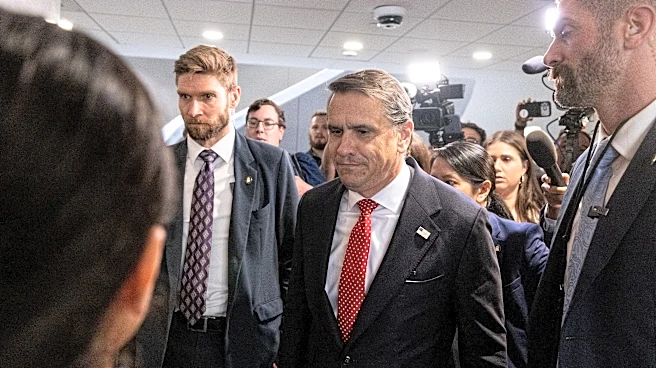
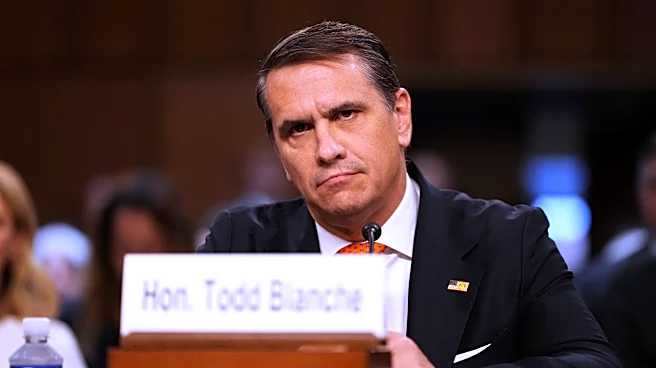
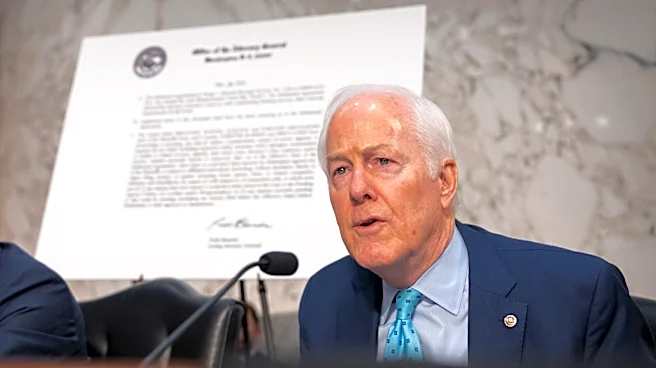
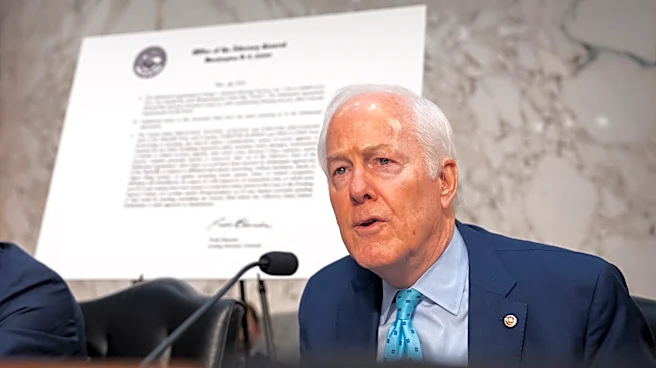
The Senate Judiciary Committee has delayed the confirmation vote for Todd Blanche as U.S. Attorney General due to opposition from key Republican senators. Chairman Chuck Grassley postponed the vote as Senators John Cornyn and Thom Tillis demanded written
assurances from the Department of Justice regarding a controversial settlement agreement. This agreement, between President Trump and his administration, included a $1.776 billion 'weaponization' fund intended for individuals claiming government abuse, potentially including Trump supporters involved in the January 6 Capitol riot. Blanche, who previously served as Trump's personal defense lawyer, had indicated the fund would be dropped, but Republicans are seeking formal confirmation. Cornyn's opposition is pivotal, as Blanche requires unanimous Republican support in the committee to advance his nomination.
Why It's Important?
The delay in Blanche's confirmation highlights significant intra-party tensions within the Republican ranks, particularly concerning the handling of legal and financial matters related to President Trump. The outcome of this nomination could influence the Department of Justice's future direction, especially regarding accountability and transparency in government settlements. The controversy over the 'weaponization' fund and tax immunity for Trump and his allies underscores broader concerns about the equitable application of justice and the potential for political favoritism. The decision could impact public trust in the DOJ and set precedents for how similar cases are handled in the future.
What's Next?
The Senate Judiciary Committee will need to reschedule the vote once the Department of Justice provides the requested assurances. Cornyn and other Republicans are expected to continue negotiations with the DOJ and the White House to resolve their concerns. The outcome of these discussions will determine whether Blanche's nomination can proceed. If the DOJ fails to meet the demands, Blanche's confirmation could face further delays or even rejection, affecting the administration's ability to implement its legal agenda.