



What's Happening?
China's military has initiated extensive live-fire drills around Taiwan, deploying air, navy, and missile units. These exercises, described as a 'stern warning' against separatist and external interference forces, come in response to recent U.S. arms
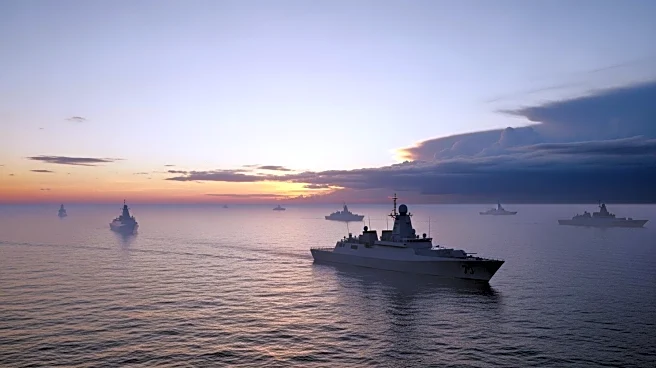
sales to Taiwan and statements from Japan's Prime Minister about potential military involvement. The drills involve destroyers, frigates, fighters, bombers, and unmanned aerial vehicles, focusing on sea-air combat readiness and blockades. Taiwan has placed its forces on high alert, condemning China's actions as aggressive and destabilizing. The exercises have led to significant disruptions in air travel, affecting over 100,000 international travelers.
Why It's Important?
The drills underscore escalating tensions in the Taiwan Strait, a critical geopolitical flashpoint. China's actions are a direct challenge to U.S. and Japanese support for Taiwan, highlighting the potential for military confrontation. The exercises demonstrate China's military capabilities and its willingness to assert control over Taiwan, which it views as a breakaway province. This situation could strain U.S.-China relations further and impact regional stability. The drills also serve as a message to Taiwan's allies, emphasizing China's resolve to prevent any moves towards Taiwanese independence.
What's Next?
The military drills are set to continue, with China establishing temporary dangerous zones around the Taiwan Strait for further exercises. Taiwan's response includes rapid military readiness exercises and international diplomatic efforts to counter China's narrative. The U.S. and its allies may need to reassess their strategic positions and support for Taiwan, potentially leading to increased military presence in the region. The situation remains volatile, with the risk of miscalculation or accidental escalation.