





What's Happening?
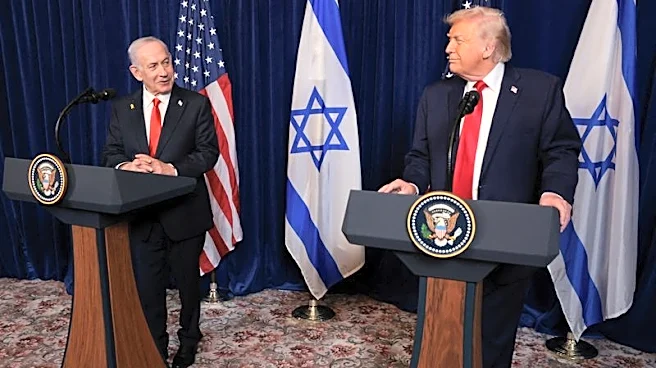
President Trump's strategy towards Iran is significantly influencing Israel's military operations in Lebanon. The strategy has led to a situation where Israel's military actions are now subject to U.S. approval, particularly concerning operations against
Hezbollah. This shift follows a period of heightened military activity by Israel against Iran and Hezbollah, which had previously enjoyed greater operational freedom. The current U.S. administration's focus on negotiating a deal with Iran has resulted in constraints on Israel's military actions, linking the Lebanese front directly to the Iranian negotiations.
Why It's Important?
The strategic alignment between the U.S. and Israel is crucial for regional stability, and the current U.S. approach to Iran is reshaping this dynamic. By tying Lebanon's situation to the broader Iranian negotiations, the U.S. has effectively limited Israel's military options, potentially altering the balance of power in the region. This development could embolden Iran and Hezbollah, as they perceive a strategic advantage in the ongoing negotiations. The implications for Israel are significant, as it must navigate these constraints while maintaining its security and strategic interests.
What's Next?
The ongoing negotiations between the U.S. and Iran will likely continue to influence Israel's military strategy. As the U.S. seeks to extend the ceasefire and reach a comprehensive agreement with Iran, Israel may need to adjust its military operations accordingly. The potential for further diplomatic engagements or shifts in U.S. policy could impact Israel's ability to act independently in Lebanon. Stakeholders in the region will be closely monitoring these developments, as they could have far-reaching consequences for regional security and stability.