




What's Happening?
A collaborative project led by the Skwlāx te Secwepemcúl̓ecw First Nation, Fisheries and Oceans Canada (DFO), BC Parks, and the Pacific Salmon Foundation (PSF) is actively working to restore the natural channel complexity of the Adams River. This initiative
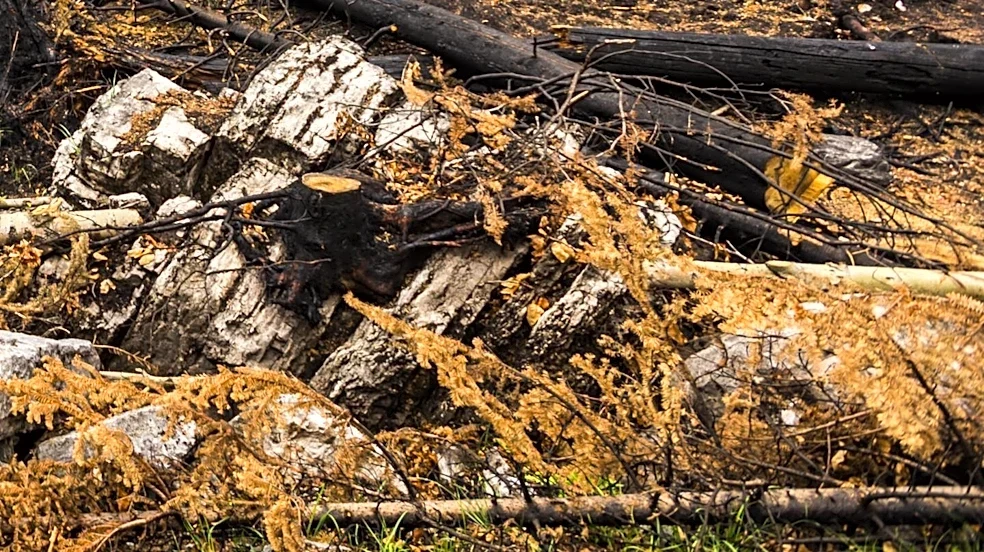
aims to mitigate the severe impact of the 2023 Bush Creek East wildfire on the river's ecosystem and its renowned sockeye salmon run. The Adams River, historically characterized by multiple braided channels, has shifted towards a single channel over the past two to three decades, leading to a significant loss of spawning habitat for sockeye, chinook, and coho salmon. The restoration efforts, which began in March, seek to redistribute the river's energy across multiple channels, thereby increasing available spawning grounds. Despite these efforts, the projected numbers for the 2026 sockeye run, a dominant year in their four-year cycle, are expected to continue a downward trend observed since 2010, with recent counts indicating a drastic reduction from initial estimates.
Why It's Important?
The decline of the Shuswap sockeye salmon run has significant ecological and cultural implications. Salmon are a keystone species, crucial for the health of the broader ecosystem, supporting diverse wildlife and contributing to nutrient cycling. For the Skwlāx te Secwepemcúl̓ecw First Nation, the salmon run holds profound cultural and traditional importance, representing a vital part of their heritage and sustenance. The ongoing decline, exacerbated by environmental changes like rising ocean temperatures and wildfires, threatens this critical resource. The collaborative restoration project highlights the urgent need for integrated approaches to conservation, bringing together Indigenous knowledge, government agencies, and scientific organizations. The success or failure of these efforts will not only impact the salmon population but also serve as a case study for future environmental restoration projects in regions affected by climate change and natural disasters, influencing how communities and governments respond to ecological crises.
What's Next?
The immediate focus is on the ongoing restoration work in the Adams River to enhance spawning habitats before the full arrival of the sockeye salmon this fall. While thousands of sockeye are anticipated for the 2026 run, the numbers are projected to be significantly lower than historical dominant year expectations, aligning with a downward trend since 2010. Further monitoring of the salmon migration and spawning success will be critical to assess the effectiveness of the restoration efforts. Stakeholders, including the Pacific Salmon Foundation and local environmental groups, will continue to analyze data on salmon returns to understand the long-term impacts of both the wildfire and the restoration work. The annual Salute the Sockeye Celebration at Tsútswecw Provincial Park will continue to raise awareness and educate the public about the challenges facing the salmon, fostering community engagement and support for conservation initiatives.
Beyond the Headlines
The situation with the Shuswap sockeye salmon run underscores the complex interplay between climate change, natural disasters, and ecological resilience. The 2023 Bush Creek East wildfire dramatically altered the river's landscape, highlighting how extreme weather events can have cascading effects on delicate ecosystems. Beyond the immediate physical restoration, the project also touches upon broader themes of environmental justice and Indigenous sovereignty, as the Skwlāx te Secwepemcúl̓ecw First Nation leads efforts to protect a resource integral to their cultural identity. The long-term survival of the salmon will depend not only on local habitat restoration but also on global efforts to mitigate climate change, particularly rising ocean temperatures, which are identified as a major factor in the salmon's declining survival rates. This scenario prompts a deeper reflection on humanity's role in environmental stewardship and the necessity of adapting conservation strategies to a rapidly changing planet.