






What's Happening?
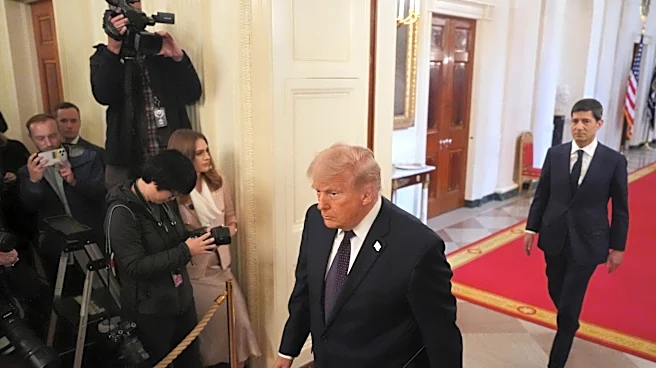
President Trump has endorsed a significant change to the U.S. childhood vaccine schedule, as announced by the Department of Health and Human Services (HHS). The new executive order, signed by Trump, directs federal agencies to align with HHS's assessment,
which has led to the removal of recommendations for several vaccines, including those for flu and COVID-19. This decision follows a comprehensive scientific assessment comparing the U.S. immunization schedule with those of other developed nations. The assessment found that the U.S. recommends more vaccines than its peers, prompting a reduction in the number of required vaccinations. The changes have sparked controversy, with major medical groups like the American Academy of Pediatrics opposing the move, citing a lack of scientific evidence to support the changes.
Why It's Important?
The overhaul of the childhood vaccine schedule could have significant implications for public health in the U.S. By reducing the number of recommended vaccines, there is concern that vaccination rates may decline, potentially leading to outbreaks of preventable diseases. The decision has been met with resistance from medical professionals who argue that the current schedule is based on decades of research and is designed to protect children when they are most vulnerable. The changes could undermine public trust in vaccines and lead to confusion among parents and healthcare providers. The legal challenges and opposition from medical groups highlight the contentious nature of the decision and its potential impact on public health policy.
What's Next?
The executive order mandates the Centers for Disease Control and Prevention (CDC) and its Advisory Committee on Immunization Practices (ACIP) to review and potentially update the vaccine schedule. This review will consider ways to provide flexibility to parents and doctors regarding the timing and sequencing of vaccinations. The ongoing legal challenges from medical groups may also influence the implementation of the new schedule. As the situation develops, stakeholders, including healthcare providers, parents, and policymakers, will need to navigate the changes and their implications for public health.