







What's Happening?
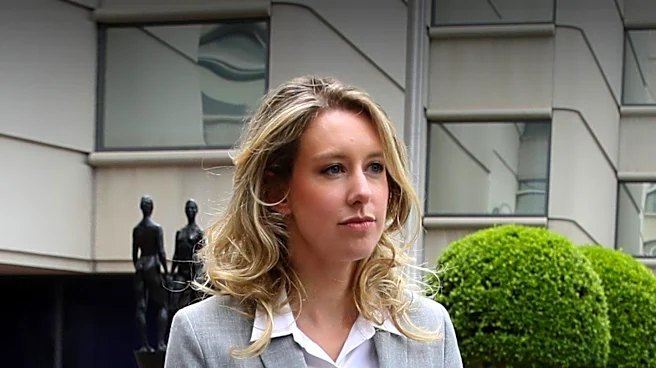
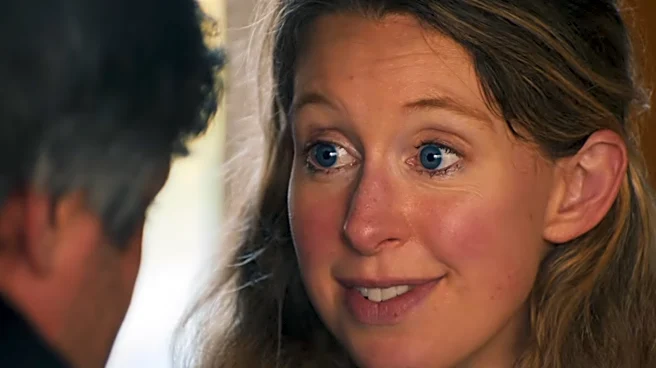
Nathan Fielder's new documentary, “You Can See Everything,” provides an intimate look into the life of Elizabeth Holmes, the convicted former CEO of Theranos, just 34 days before she began her 11-year prison sentence. The film, co-directed by Fielder and
Lance Oppenheim, captures Holmes and her partner, William “Billy” Evans, as they invite the filmmakers into their home. The documentary delves into Holmes' persistent claims that she never lied, contrasting her explanations with her past statements and actions. Fielder employs his signature style of questioning, often literal and patient, to explore the discrepancies between Holmes' self-perception and the public record. The film also features Holmes watching Amanda Seyfried's portrayal of her in “The Dropout,” offering a unique insight into her reaction to external interpretations of her story. The narrative aims to examine deception, devotion, and the stories individuals construct to cope with their realities.
Why It's Important?
This documentary is significant as it offers a unique, real-time perspective on a high-profile figure grappling with the consequences of her actions. By granting Fielder access, Holmes and Evans seemingly hoped to influence public perception, believing Fielder's unconventional approach might exonerate her. However, the film's strength lies in its ability to highlight the disconnect between Holmes' internal narrative and the objective facts of her case. Fielder's questioning style, which often pushes subjects to confront contradictions, is particularly effective in this context, forcing viewers to consider the nature of truth and self-deception. The documentary's exploration of Holmes' insistence on her innocence, despite her conviction for wire fraud, underscores the psychological complexities of individuals facing severe legal repercussions and the narratives they maintain to make sense of their circumstances. This contributes to a broader understanding of accountability and the human element in corporate scandals.
What's Next?
The release of “You Can See Everything” is expected to generate considerable discussion and analysis regarding Elizabeth Holmes' character, her claims of innocence, and the effectiveness of Fielder's documentary approach. The film's intimate portrayal may lead to varied public reactions, from renewed condemnation to a nuanced understanding of the psychological aspects of her situation. Critics and audiences will likely scrutinize the interactions between Fielder and Holmes, debating the extent to which the documentary provides new insights or merely reinforces existing perceptions. The film could also spark conversations about the ethics of documentary filmmaking, particularly when dealing with convicted individuals, and the potential for such works to influence public opinion or historical narratives. The ongoing public discourse will likely continue to examine the themes of truth, deception, and the construction of personal narratives in the face of overwhelming evidence.
Beyond the Headlines
Beyond the immediate story of Elizabeth Holmes, the documentary delves into profound questions about the nature of persuasion, self-deception, and the stories people tell themselves and others to navigate difficult realities. Fielder's method of patient, literal questioning serves as a powerful tool to expose the layers of rationalization and selective memory that can accompany significant wrongdoing. The film implicitly explores how individuals maintain a sense of self-worth and integrity even when confronted with overwhelming evidence of their failures. Furthermore, the documentary touches on the broader societal implications of charismatic figures who can convince others of improbable claims, highlighting the vulnerabilities within systems that rely on trust and reputation. The unsettling dynamic between Holmes, Evans, and Fielder also raises questions about the motivations behind granting such access and the inherent risks of attempting to control one's narrative through media, especially when facing a public reckoning.