








What's Happening?
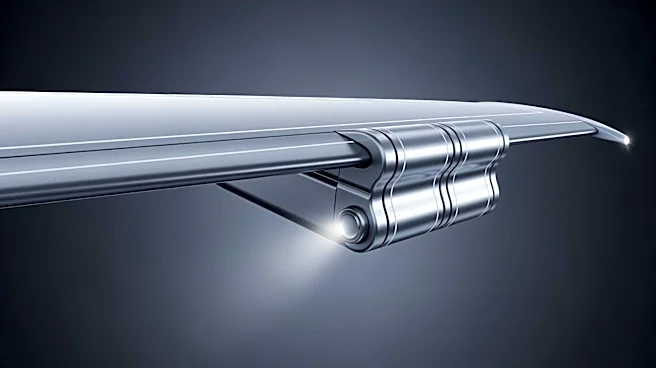
Boeing is working on enhancing the weapons capacity of the U.S. Air Force's B-1B Lancer bombers by repurposing decommissioned nuclear weapon hardpoints. The project involves the development of a Load Adaptable Modular (LAM) pylon, which will be attached
to six external hardpoints on the bomber's lower fuselage. These hardpoints were originally designed for air-launched cruise missiles with nuclear payloads but were decommissioned under arms control agreements with Russia. The LAM pylon aims to enable the B-1B to carry larger munitions that do not fit in its internal bomb bays, including long-range hypersonic missiles. Boeing has been testing the LAM since 2024, and a preliminary design review has been completed, marking a significant milestone in the project.
Why It's Important?
The development of the LAM pylon is significant for the U.S. Air Force as it seeks to enhance the operational capabilities of its B-1B bombers. By repurposing decommissioned hardpoints, the Air Force can expand the bomber's payload capacity, allowing it to carry advanced munitions like hypersonic missiles. This capability is crucial for maintaining strategic military advantages and ensuring the B-1B remains a vital component of the U.S. bomber fleet. The project also reflects broader defense strategies to adapt existing military assets to new technological advancements and changing geopolitical landscapes.
What's Next?
Boeing will continue to advance the LAM project through further design reviews and testing phases. A critical design review is required before the LAM pylon can be approved for production and integration with operational bombers. The U.S. Air Force is likely to focus on integrating long-range hypersonic missiles and other advanced munitions with the B-1B, enhancing its strategic capabilities. The successful implementation of the LAM pylon could lead to further innovations in adapting existing military platforms to meet modern defense needs.