
What's Happening?
Heavy rains and thunderstorms have caused significant disruption in southern Israel, particularly affecting the city of Eilat. The Israel Meteorological Service reported that powerful cloudbursts began
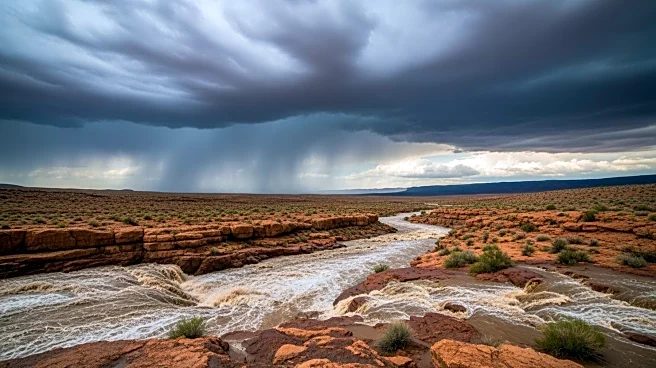
around midday, leading to flash floods in the Negev and Arava regions. These conditions have resulted in the closure of all road access to Eilat, with highways 12, 40, and 90 being shut down due to severe flooding. The only exit from the city is now through Ramon Airport or the nearby community of Be’er Ora. Emergency services have been actively involved in rescue operations, extracting stranded hikers and advising the public to avoid desert riverbeds. The flooding has also led to the closure of several nature reserves and national parks, including the Ein Gedi reserve. The weather forecast predicts continued rain and isolated thunderstorms, with a significant drop in temperatures expected.
Why It's Important?
The severe weather conditions in southern Israel highlight the vulnerability of infrastructure and communities to extreme weather events. The closure of major highways and the isolation of Eilat underscore the potential for significant economic and logistical challenges, particularly in a region that relies heavily on tourism. The disruption of travel and the closure of popular tourist sites could have a negative impact on local businesses and the broader tourism industry. Additionally, the need for emergency services to conduct rescue operations places a strain on resources and highlights the importance of preparedness and response strategies in the face of natural disasters.
What's Next?
As the weather conditions are expected to persist, authorities will likely continue to monitor the situation closely. Efforts to clear debris and reopen key routes are underway, but the full restoration of access to Eilat may take time. The ongoing risk of flooding in southern and eastern riverbeds suggests that emergency services will remain on high alert. In the longer term, this event may prompt discussions on improving infrastructure resilience and emergency response capabilities in the region. The impact on tourism and local businesses will also need to be assessed, with potential support measures considered to mitigate economic losses.