







What's Happening?
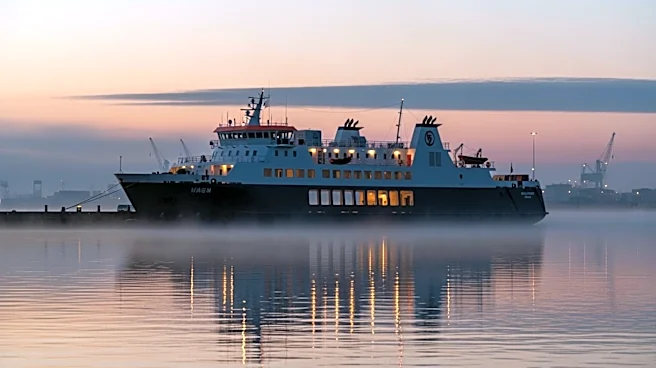
For the first time in over two decades, the British Army has chartered a civilian ferry to transport its forces for a NATO exercise in Germany. Over 1,400 troops boarded a DFDS ferry in Newcastle for a 16-hour journey to the Netherlands, continuing by
rail to Germany for Exercise Rhino Storm. This operation is part of a strategy to practice using civilian transport alongside military vehicles and aircraft. The exercise involves the 7th Light Mechanized Brigade, known as The Desert Rats, joining French soldiers from the Foreign Legion. The use of the ferry demonstrates the army's readiness and ability to mobilize large contingents efficiently.
Why It's Important?
The British Army's use of a civilian ferry for military transport highlights a strategic shift towards more flexible and efficient deployment methods. This approach allows for rapid mobilization of troops and equipment, which is crucial for maintaining readiness and operational capability in joint exercises with NATO allies. The decision to use civilian transport also reflects a cost-effective alternative to traditional military transport methods, potentially influencing future military logistics strategies. This development underscores the importance of adaptability in military operations and the need for innovative solutions to logistical challenges.
What's Next?
The success of this operation may lead to increased use of civilian transport in military logistics, particularly for large-scale deployments. The British Army and other NATO members might explore similar strategies to enhance their rapid deployment capabilities. Additionally, the outcomes of Exercise Rhino Storm will likely inform future military exercises and operational planning within NATO. The collaboration between British and French forces in this exercise could strengthen bilateral military relations and set a precedent for future joint operations.