





What's Happening?
The World Trade Organization (WTO) has reported that the ongoing conflict in the Middle East has severely disrupted the global fertiliser trade, posing significant risks to food security worldwide. The report highlights that several economies in Africa
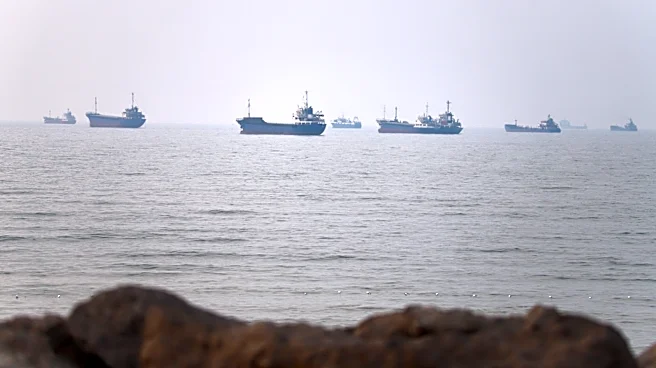
and Asia are particularly vulnerable to fertiliser shortages and rising prices due to the crisis. Fertiliser shipments through the Strait of Hormuz have nearly halted, leading to a sharp increase in prices. Urea prices, for instance, surged from $400 to over $850 per metric tonne before stabilizing at $453. The report also notes that Gulf economies are major exporters of nitrogenous and phosphatic fertilisers, with significant portions going to Asia. The disruption has led to export restrictions and licensing requirements, further tightening supply. The WTO suggests that reopening the Strait of Hormuz could alleviate trade tensions and stabilize global markets.
Why It's Important?
The disruption in fertiliser trade has far-reaching implications for global food security, particularly affecting countries heavily reliant on imports from the Gulf region. The increased fertiliser prices could lead to higher food costs, impacting consumers worldwide, especially in developing nations. The situation underscores the vulnerability of global supply chains to geopolitical conflicts and highlights the need for diversified sourcing strategies. The potential for prolonged disruptions could exacerbate food insecurity in regions already facing economic challenges. Additionally, the report emphasizes the importance of policy responses that consider the needs of developing economies, which are disproportionately affected by such trade disruptions.
What's Next?
The WTO suggests that reopening the Strait of Hormuz is crucial for easing trade frictions and stabilizing markets. However, the geopolitical complexities of the region may delay such actions. In the meantime, affected countries may need to explore alternative sources for fertilisers or increase domestic production to mitigate the impact. International cooperation and dialogue may be necessary to address the broader implications of the conflict on global trade. Stakeholders, including governments and international organizations, may need to collaborate on contingency plans to ensure food security and economic stability.