

What's Happening?
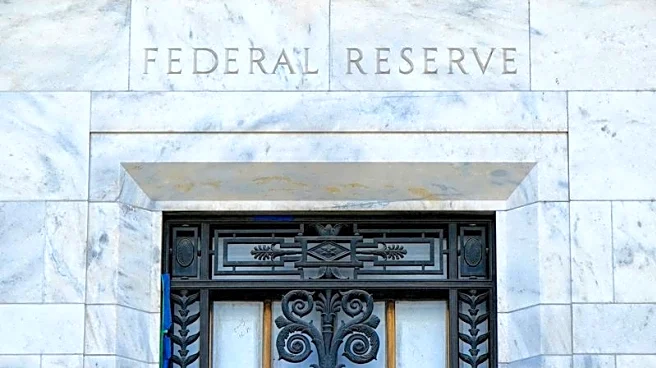
President Trump, along with his Treasury Secretary and his nominee for Federal Reserve Chair, Kevin Warsh, is advocating for a strategy that leverages artificial intelligence (AI) to replicate the economic boom of the 1990s. This period was characterized
by significant productivity gains, low unemployment, and controlled inflation, largely attributed to the advent of the internet. Trump believes that AI can similarly boost productivity and economic growth, and he has criticized current Fed Chair Jerome Powell for not lowering interest rates aggressively enough. Warsh, who has previously been an inflation hawk, now supports the idea that AI-driven productivity could justify lower interest rates. However, many economists are skeptical, pointing out that the economic conditions today are vastly different from those in the 1990s, with increased trade barriers and a different global economic landscape.
Why It's Important?
The potential impact of AI on the U.S. economy is significant, as it could lead to increased productivity and economic growth. However, the skepticism from economists highlights the complexities of implementing such a strategy. The current economic environment, marked by high federal debt and trade barriers, differs from the 1990s, which could limit the effectiveness of AI in replicating past economic successes. The debate over interest rates and AI's role in the economy could influence future monetary policy decisions, affecting businesses, consumers, and the overall economic landscape. If AI can indeed drive productivity without spurring inflation, it could lead to a new era of economic growth. However, if the strategy fails, it could result in economic instability.
What's Next?
If confirmed by the Senate, Kevin Warsh's leadership at the Federal Reserve could lead to a shift in monetary policy, potentially lowering interest rates to stimulate economic growth. This could result in a clash within the Federal Reserve, as many current members may not agree with Warsh's approach. The administration's focus on AI as a driver of economic growth will likely continue, with potential policy adjustments to support AI integration in various industries. The outcome of this strategy will depend on how effectively AI can be harnessed to improve productivity and whether it can overcome the current economic challenges.