
What's Happening?
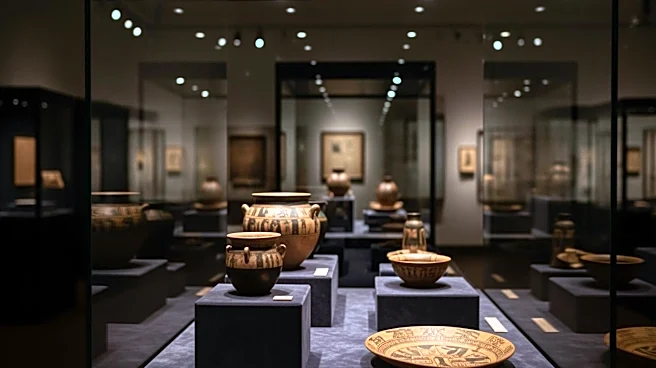
In 2017, the Louvre Abu Dhabi was inaugurated, marking a significant cultural collaboration between France and the United Arab Emirates. However, the museum's acquisition of a Tutankhamun stele has come
under scrutiny due to questions about its provenance. French museum official Jean-Luc Martinez, who was involved in the acquisition, is facing allegations of complicity in fraud and money laundering. The stele, along with other artifacts, was allegedly part of a network of looted antiquities sold to major museums, including the Louvre Abu Dhabi and the Metropolitan Museum of Art. Investigations have revealed that traffickers used fabricated documents to disguise the origins of these artifacts.
Why It's Important?
The controversy highlights the ongoing challenges in the art world regarding the provenance of antiquities. It underscores the need for rigorous due diligence and ethical standards in museum acquisitions to prevent the trade of looted artifacts. The case also raises questions about the role of prominent cultural institutions in potentially enabling the illicit antiquities market. The involvement of high-profile figures like Jean-Luc Martinez suggests that even well-established museums can be vulnerable to fraudulent practices, which could damage their reputations and undermine public trust.
What's Next?
As investigations continue, there may be further legal actions against those involved in the trafficking network. Museums worldwide might face increased pressure to review their collections and acquisition processes to ensure compliance with international standards. The case could lead to stricter regulations and more transparency in the art market, potentially affecting how museums acquire and display ancient artifacts. Additionally, there may be diplomatic implications as countries seek the return of cultural heritage items.
Beyond the Headlines
The case raises broader ethical questions about the responsibilities of museums in preserving cultural heritage. It highlights the tension between the desire to showcase global art and the need to respect the cultural property rights of source countries. The situation also reflects the complex interplay between cultural diplomacy and the art market, where financial interests can sometimes overshadow ethical considerations.