





What's Happening?
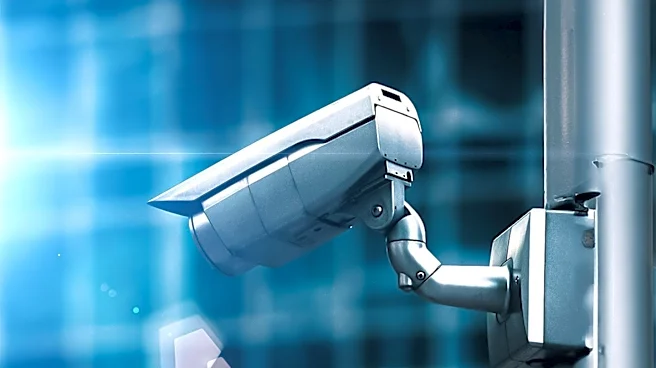
AI security cameras are evolving to offer advanced detection capabilities, including movement detection, classification of objects like people, vehicles, or pets, and even facial recognition. These features operate at different stages: movement detection identifies
any change, classification labels the type of object, recognition matches identities, and search retrieves saved events. The hardware, internet, and fee requirements for these capabilities can vary significantly. Basic classification might run on the camera itself, while more complex features like identity matching or cross-camera tracking may require a compatible hub or cloud service. False alerts can still occur due to factors like distant subjects, partial views, reflections, or poor night detail, necessitating careful camera placement and sensitivity adjustments.
Why It's Important?
The advancement of AI in security cameras is transforming how U.S. homeowners and businesses approach surveillance, offering more precise and actionable alerts while reducing notification fatigue from false alarms. This technology allows for more intelligent monitoring, distinguishing between a delivery driver and a stray animal, thereby enhancing efficiency and response accuracy. However, the varied requirements and potential costs associated with advanced AI features mean consumers must carefully evaluate their needs against the capabilities and pricing models of different systems. The ethical implications of facial recognition and data privacy are also significant, prompting considerations about consent, data storage, and the potential for misuse. This evolution impacts not only personal security but also broader societal discussions around surveillance, privacy, and the role of AI in daily life.
What's Next?
The future of AI security cameras will likely see continued refinement in detection accuracy, further reduction of false positives, and more seamless integration with other smart home and business systems. Expect advancements in on-device AI processing to reduce reliance on cloud services for basic functions, potentially enhancing privacy and reducing latency. More sophisticated AI models may enable predictive analytics, identifying unusual patterns of behavior before an incident occurs. The industry will also face ongoing challenges in balancing advanced capabilities with user privacy concerns, potentially leading to new regulations or industry standards for data handling and facial recognition technology. Consumers can anticipate a wider array of customizable AI features, allowing for highly tailored security solutions that adapt to specific environmental and personal needs.
Beyond the Headlines
The increasing sophistication of AI security cameras delves into deeper societal and ethical considerations beyond immediate security benefits. The ability of cameras to classify and even recognize individuals raises significant privacy concerns, particularly regarding who has access to this data, how it's stored, and for what purposes it might be used. This technology could lead to a 'surveillance society' where individuals are constantly monitored, potentially impacting civil liberties and the right to anonymity. Culturally, it reflects a growing acceptance of pervasive technology in personal spaces, driven by a desire for safety and control. Legally, the use of facial recognition by private entities is a developing area, with varying regulations across different states and localities. The balance between enhanced security and individual freedoms will be a critical ongoing debate as these technologies become more commonplace, shaping future policies and public perceptions of privacy in the digital age.