


What's Happening?
April 2026 offers a celestial showcase with Venus and Uranus appearing close together in the night sky, and the Lyrid meteor shower peaking later in the month. Venus, visible in the western sky after sunset, will be in conjunction with Uranus on April 23,
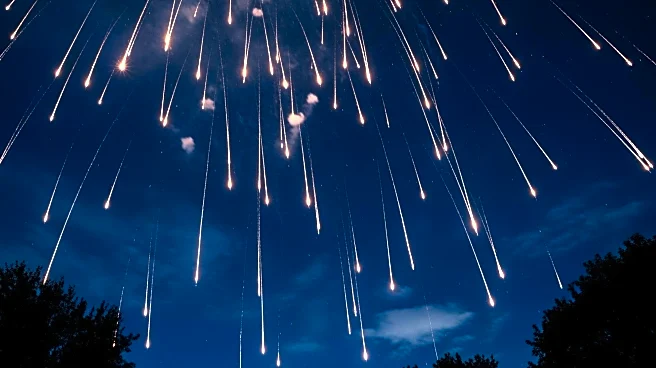
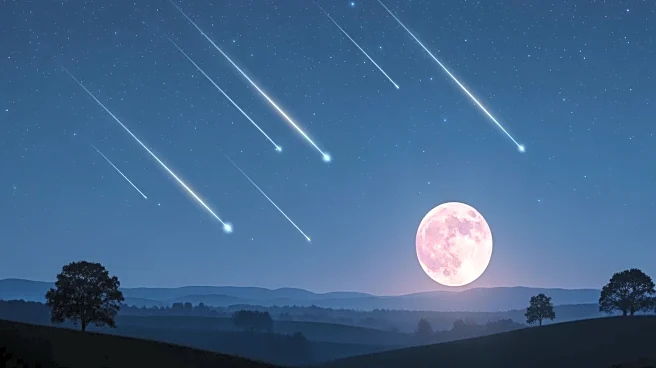
providing a unique opportunity for stargazers to observe the two planets in close proximity. The Lyrid meteor shower, active from April 14 to 30, will peak on the night of April 22, offering optimal viewing conditions once the Moon sets. This month also features notable events involving Jupiter and its moons, with shadow transits visible from different parts of the U.S.
Why It's Important?
These astronomical events provide both amateur and professional astronomers with opportunities to observe and study planetary movements and meteor showers. The conjunction of Venus and Uranus is a rare event that can enhance understanding of planetary alignments. The Lyrid meteor shower, one of the oldest known meteor showers, offers insights into the behavior of cometary debris as it interacts with Earth's atmosphere. Such events also serve to engage the public in astronomy, fostering interest and education in the sciences.
What's Next?
As the month progresses, observers can look forward to more planetary activity, including the movements of Mars, Mercury, and Saturn in the predawn sky. The continued observation of Jupiter and its moons will provide further opportunities for study, particularly during shadow transits. These events will continue to be of interest to both the scientific community and the general public, with potential for educational outreach and public engagement.