





What's Happening?
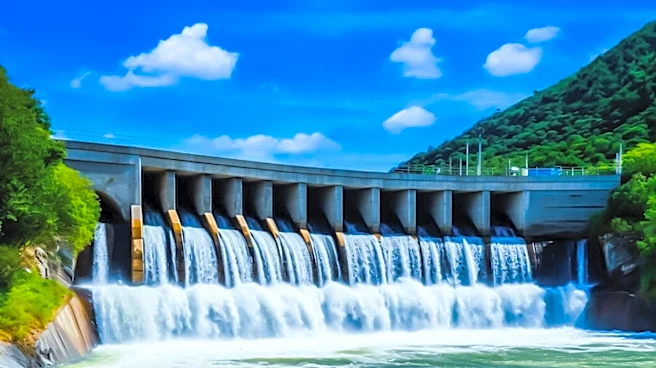
Brookfield Renewable, a major dam owner in Maine, is facing increased scrutiny and calls for stricter regulations following a fish kill in the Penobscot River in July. The incident, which resulted in the death of several thousand juvenile landlocked salmon
and other fish, was caused by a turbine shutdown at the Ripogenus Dam due to a broken transmission line cross-arm at McKay Station. This event follows a similar incident in 2023. Conservation groups and local residents accuse Brookfield of poor maintenance and inadequate oversight, arguing that the company's 1996 license, which is up for renewal in September, is insufficient for protecting wildlife. While Brookfield reports shutdowns to the Federal Energy Regulatory Commission (FERC) and the Maine Department of Environmental Protection, it is not required to report fish kills. The company states it has invested nearly $3 million in maintaining its transmission lines over the past decade and plans further investments.
Why It's Important?
This situation is important for environmental conservation, particularly for aquatic ecosystems in the U.S., and for the regulation of hydroelectric power. The repeated fish kills highlight a potential conflict between energy generation and environmental protection, raising questions about the adequacy of existing licensing and oversight mechanisms for dams. For the energy industry, particularly hydropower operators, this case could set a precedent for more stringent environmental requirements and increased accountability for operational failures. It underscores the need for robust infrastructure maintenance and potentially for backup systems to prevent sudden water flow changes. For local communities and recreational industries, such as fishing and whitewater rafting, these incidents represent significant economic and ecological losses, impacting tourism and natural resources. The outcome of Brookfield's license renewal process could influence future environmental regulations for dams nationwide.
What's Next?
Brookfield Renewable's 1996 license for the Ripogenus Dam is set to expire in September, and its renewal is contingent on state and federal reviews. The deadline for public comments to federal regulators is August 28, after which the Maine Department of Environmental Protection will conduct a water quality assessment, a process that could take up to a year. Conservation groups, including the Maine Council of Trout Unlimited, are advocating for significant changes to the license, such as requiring a dam keeper for faster response to problems, ensuring consistent water flow, installing redundant transmission lines, and implementing automatic backup systems to restore water flows during generator failures. FERC has the authority to fine Brookfield for operational issues or recommend license amendments, and in cases of 'egregious non-compliance,' it can even halt dam operations. The ongoing review and public input will determine the future operational conditions of the dam and potentially influence broader regulatory standards.
Beyond the Headlines
This incident delves into the complex legacy of hydroelectric power in the U.S., balancing its role as a renewable energy source with its environmental impacts. The shift from the dam's previous ownership, which maintained consistent water flow for a paper mill, to Brookfield's current operation, which optimizes flows for electricity generation, illustrates how economic incentives can alter ecological outcomes. The calls for a 'dam keeper' and redundant systems reflect a desire to re-embed human oversight and resilience into automated energy systems. This case also highlights the limitations of current reporting requirements, where operational disruptions are reported but their ecological consequences, like fish kills, are not explicitly mandated. This gap in reporting could prompt a re-evaluation of environmental monitoring and accountability standards for energy infrastructure, pushing for a more holistic assessment of impacts that includes both operational metrics and ecological outcomes. The debate also touches on the broader challenge of modernizing aging infrastructure while protecting natural resources.