




What's Happening?
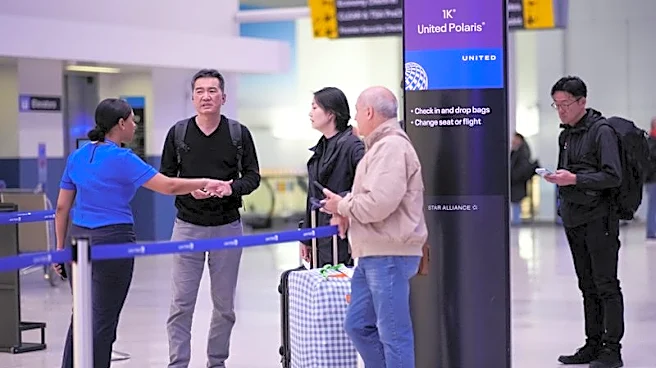
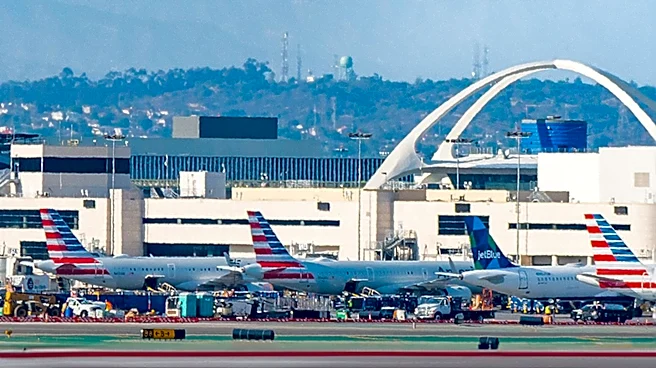
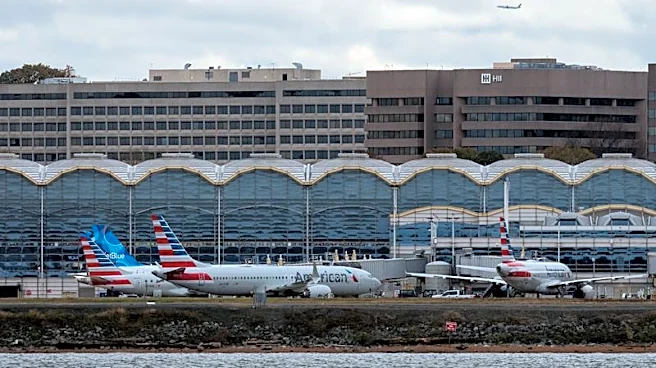
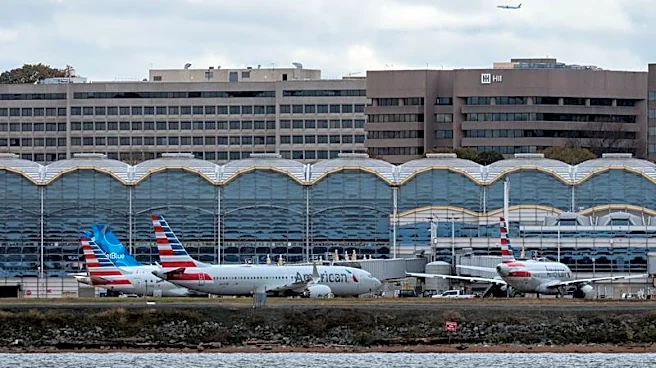
A nationwide ground stop ordered by the Federal Aviation Administration (FAA) on Friday caused widespread flight disruptions, leading to over 17,850 cancellations and delays across U.S. airports over three days. The FAA attributed the disruption to a flood
of data overwhelming parts of its aging telecommunications network, which interfered with air traffic control communications and radar feeds. The issue originated from a new router installation by contractor L3Harris at a radar site in Amarillo, Texas, and a radio communications site in El Dorado, Arkansas. Delta CEO Ed Bastian has previously criticized the outdated technology in air traffic control, stating that controllers' screens "look like something out of the 1960s and '70s" and that flying times have not improved since the 1950s. The incident highlights the reliance on manual communication and older systems within the airline industry for recovery operations.
Why It's Important?
This event underscores a critical vulnerability in the U.S. air travel infrastructure: its reliance on outdated technology. The disruption caused significant economic impact, with airlines facing substantial costs for repositioning aircraft, rescheduling crews, and accommodating stranded passengers. Travelers experienced lost time, missed work, and unexpected expenses, while delayed cargo affected businesses. The incident also brings into question the resilience of the national air traffic control system and its ability to handle modern data loads. The FAA's preliminary findings suggest a systemic issue rather than a cyberattack, pointing to a need for significant investment in technological upgrades to prevent future widespread disruptions and ensure the efficiency and safety of air travel.
What's Next?
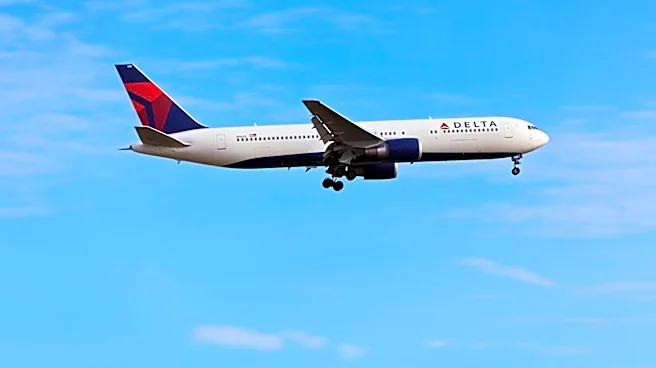
The FAA's investigation into the precise cause of the data flood and its impact on the telecommunications network is ongoing. While the FAA declared its system stable, airlines continued to face challenges in restoring normal schedules, with some carriers like Delta advising passengers to rebook flights. The incident is likely to intensify calls for modernization of air traffic control systems and broader airline operational technologies. Industry experts suggest that recovery from such widespread disruptions typically takes several days. The financial impact on airlines, similar to a previous incident that cost Delta an estimated $500 million, will be assessed, potentially prompting further discussions on infrastructure investment and technological upgrades within the aviation sector.
Beyond the Headlines
The FAA ground stop reveals a deeper issue of technological stagnation within critical national infrastructure. The reliance on systems described as being from the 1960s and '70s suggests a long-standing underinvestment in modernization. This not only affects operational efficiency and passenger experience but also raises concerns about national security and economic competitiveness. The incident could serve as a catalyst for a more aggressive push towards integrating advanced technologies, such as artificial intelligence, into air traffic control, as suggested by Delta CEO Ed Bastian. However, such transitions are complex, costly, and require careful planning to avoid further disruptions, highlighting a significant challenge for policymakers and industry leaders.