





What's Happening?
Namibian Marine Phosphate (NMP) has received an environmental clearance certificate (ECC) from Namibia's Ministry of Environment, Forestry and Tourism (MEFT) to dredge the Atlantic seabed for phosphate. This decision allows the Sandpiper Project to proceed
with mining within a concession spanning 2,234 square kilometers (863 square miles) off the coast of Walvis Bay. NMP, 85% owned by Oman-based Mawarid Mining LLC and 15% by Namibian Havana Investments (Pty) Ltd., plans to extract phosphate-rich sediments from depths of 180-250 meters. This marks a significant development as phosphate has previously only been commercially mined on land. The clearance follows a decade-long legal dispute, with the High Court of Namibia ruling in 2021 that NMP required a valid ECC to conduct any physical mining or development work, despite holding a 20-year mining license. Environmental groups, such as Ocean Conservation Namibia (OCN), have strongly criticized the decision, warning of severe impacts on the Benguela marine ecosystem and Namibia’s fishing industry.
Why It's Important?
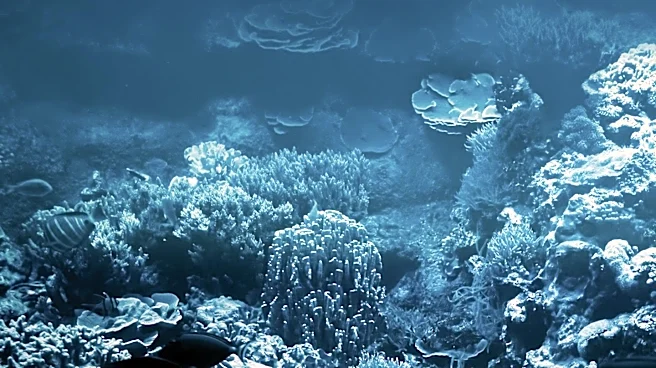
The approval of seabed phosphate mining in Namibia carries significant environmental and economic implications. Environmentalists are concerned about the potential destruction of marine habitats, the creation of widespread sediment plumes affecting water quality and marine life, and the possible release of heavy metals and other toxic substances, including uranium, into the food web. These impacts could severely damage the Benguela marine ecosystem, one of the world's most productive coastal upwelling zones, and consequently, Namibia's vital fishing industry. The fisheries sector, which supports over 280,000 Namibians and generated $794 million in exports in 2024, is particularly vulnerable, with experts warning of its potential collapse. Furthermore, the project represents a novel form of marine mining on this scale, making Namibia a testing ground with unpredictable environmental consequences. Critics also question the economic benefits, noting that the project promises only about 2,000 jobs compared to the 20,000 direct jobs in the fishing sector, and argue that Namibia does not have an agricultural demand for fertilizer that justifies such environmental risks.
What's Next?
While NMP has received its environmental clearance, active mining operations are not expected to commence immediately. The company still needs to obtain land-based processing permits and establish a government-led oversight committee. Subject to these further approvals, NMP anticipates controlled dredging within a small portion of the concession, covering approximately 1.7 square kilometers (0.66 square miles) annually, with onshore processing aiming to produce about 3 million tonnes of phosphate concentrate per year. The Ministry of Environment, Forestry and Tourism has indicated that a further pronouncement on the matter will be made in due course. Meanwhile, environmental organizations and local experts are likely to continue their advocacy against the project, potentially exploring further legal avenues or public awareness campaigns to highlight the risks associated with seabed mining and its potential long-term effects on Namibia's marine environment and economy.
Beyond the Headlines
The controversy surrounding Namibia's seabed phosphate mining project highlights a broader global tension between economic development and environmental preservation, particularly in the context of emerging deep-sea resource extraction. This case could set a precedent for other nations considering similar ventures, demonstrating the challenges of balancing industrial growth with ecological sustainability. The debate also touches upon issues of scientific integrity, as critics allege that the environmental impact assessments conducted by the mining company are flawed and based on outdated experimentation, potentially underestimating the risks of heavy metal and uranium contamination. The long-term implications extend to public health, with concerns about the safety of consuming fish from affected areas and the regulatory standards for heavy metals in phosphate fertilizers. This situation underscores the need for robust, independent scientific evaluation and transparent governance in approving projects with significant environmental and socio-economic ramifications, especially when foreign entities hold a majority stake in such ventures.