



What's Happening?
The United States Department of Agriculture (USDA) has intensified its efforts to combat the New World screwworm following the confirmation of nine new cases in Sonora, Mexico. This development coincides with the reopening of the Douglas port of entry
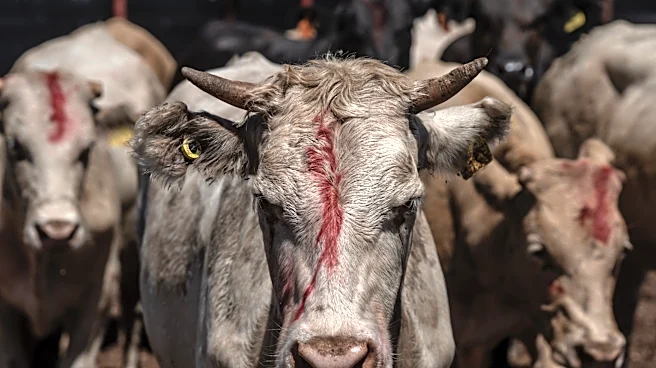
to cattle trade, which had been closed for 14 months. To safeguard American agriculture, the USDA has implemented enhanced surveillance measures, rapid diagnostic capabilities, and layered inspections at border crossings. Furthermore, the Food and Drug Administration (FDA) has issued Emergency Use Authorizations (EUAs) for several new animal products. These include Elanco's CLiK Extra wound spray and Zoetis' SimparicaTrio for prevention and treatment, and Elanco's Credelio Quattro, which received the first FDA conditional approval for New World screwworm treatment in dogs. These additions build upon earlier authorizations for Elanco's Negasunt Powder and Tanidil, and Bimeda's Bimectin. The reopening of cattle crossings at Douglas, Arizona, and Agua Prieta, Sonora, on August 24, marks a significant step in restoring exports from Sonora and Chihuahua, with other ports like Santa Teresa and Columbus expected to follow gradually.
Why It's Important?
The re-emergence and spread of the New World screwworm pose a significant threat to the U.S. livestock industry and wildlife populations. This parasitic insect, known for feeding on open wounds, can be particularly devastating to young animals, including fawns and does. The economic impact of screwworm outbreaks can be substantial, as evidenced by the estimated $2 billion in lost exports for Mexico's cattle sector due to previous border closures. The USDA's proactive measures, including enhanced surveillance and the authorization of new treatments, are crucial for preventing a widespread infestation within the U.S. The reopening of border crossings, while economically beneficial for trade, necessitates stringent biosecurity protocols to mitigate the risk of the screwworm entering the country. The involvement of hunters in monitoring wildlife for signs of infestation highlights the collaborative effort required to protect both domestic animals and natural ecosystems from this pest.
What's Next?
The gradual reopening of additional U.S.-Mexico border ports for cattle trade is anticipated, which will require continued vigilance and adherence to strict inspection protocols. Mexican food-safety agency SENASICA has committed to reinforced traceability and ongoing sterile-fly dispersal in Sonora and Chihuahua as part of the binational eradication strategy. U.S. authorities have allocated nearly $1 billion towards sterile-fly production, indicating a long-term commitment to containment. Hunters in Texas and other border states will continue to play a vital role in wildlife conservation by reporting any suspected signs of New World screwworm infestations to state wildlife departments. The effectiveness of the newly authorized animal products in preventing and treating screwworm will be closely monitored as part of the ongoing response efforts.
Beyond the Headlines
The New World screwworm threat underscores the interconnectedness of agricultural health, wildlife conservation, and international trade. The economic cost of outbreaks, coupled with the potential for ecological disruption, highlights the need for robust cross-border cooperation and scientific innovation in pest management. The use of sterile-fly technology, a biological control method, demonstrates a sophisticated approach to pest eradication that minimizes reliance on chemical interventions. This situation also brings to light the critical role of public awareness and citizen participation, as hunters are being enlisted as frontline observers in the fight against the screwworm. The long-term success in managing this threat will depend on sustained funding for research and control programs, as well as adaptive strategies to address potential resistance to treatments or changes in the pest's distribution due to environmental factors.