





What's Happening?
WOTA Corp., a Japanese water innovation company, is introducing its water regeneration technology to water-scarce Caribbean islands, aiming to provide a new path for growth by easing water constraints. The company, an Earthshot Prize finalist, is working
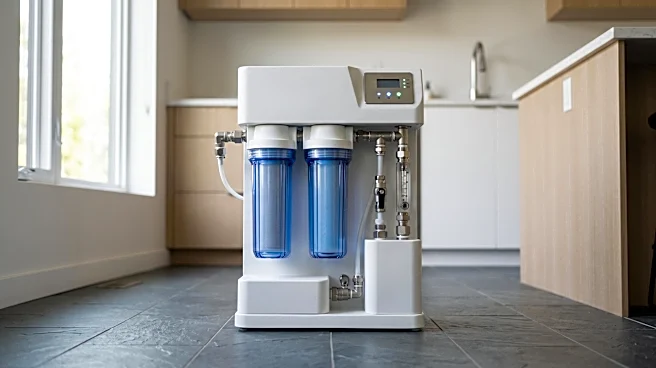
with communities in Antigua and Barbuda, with support from the Ministry of Economy, Trade and Industry, the Government of Japan, and the United Nations Industrial Development Organization (UNIDO). WOTA's 'Residential Water Regeneration System' is designed to regenerate and reuse up to 97% of domestic wastewater from kitchens, bathrooms, and laundry for everyday use. This system employs automated monitoring and treatment technology, with sensors continuously tracking water quality and operating conditions, and algorithms automatically controlling the treatment process. A demonstration project in Antigua and Barbuda showed one household regenerating 1,720 out of 2,356 US gallons used in a single month, reducing the need for additional freshwater by 73%. This initiative, called 'Water 2040 Island Grows Initiative,' seeks to integrate small-scale, decentralized water regeneration into daily water supply across Caribbean islands and potentially globally.
Why It's Important?
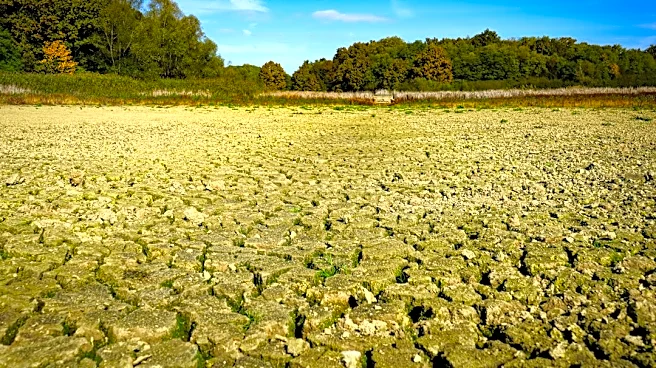
Water scarcity significantly limits growth for small island states, impacting households, public services, tourism, and new investments. Countries like Antigua and Barbuda and Barbados are classified as water-scarce by the Food and Agriculture Organization of the United Nations, with Antigua and Barbuda having only about 557 m³ of renewable water per person per year, well below the 1,000 m³ scarcity threshold. Traditional solutions like desalination are often costly and energy-intensive, and climate change exacerbates these issues through increased droughts and extreme weather events. WOTA's decentralized water regeneration systems offer a sustainable alternative by reducing the demand for new freshwater and minimizing wastewater discharge, which helps protect marine environments crucial for tourism-dependent economies. This approach allows for incremental capacity additions, community by community, without requiring large-scale infrastructure, making it a flexible and resilient solution for regions with limited land and freshwater resources.
What's Next?
WOTA is leading the 'Water 2040 Island Grows Initiative' to expand the adoption of its decentralized water regeneration systems across the Caribbean and beyond. The company plans to engage with governments, utilities, businesses, and communities to explore deployment opportunities. WOTA will present its vision at the Commonwealth Business Forum 2026, held during the Commonwealth Heads of Government Meeting (CHOGM), to discuss how water security underpins sustainable growth. The initiative aims to establish a model for water circulation that enhances everyday water security, disaster resilience, marine conservation, and the sustainability of tourism and local economies. The success of these pilot projects and subsequent partnerships will determine the broader implementation and impact of this technology in addressing global water scarcity.
Beyond the Headlines
The deployment of WOTA's water regeneration technology highlights a shift towards decentralized and sustainable water management solutions, particularly relevant for vulnerable island nations. This approach not only addresses immediate water scarcity but also offers long-term environmental benefits by reducing pollution and protecting vital ecosystems like coral reefs and beaches, which are critical for the 'blue economy' of these islands. The initiative also underscores the potential for technological innovation to foster economic growth without compromising environmental integrity, offering a model for other regions facing similar challenges. The collaboration between a private enterprise, government bodies, and international organizations demonstrates a multi-stakeholder approach to tackling complex global issues, potentially setting a precedent for future sustainable development projects.