





What's Happening?
The Department of Homeland Security (DHS) is actively working to improve its counter-Unmanned Aerial System (UAS) technology and overall security planning in preparation for the 2028 Olympic Games in Los Angeles. The games are expected to host over 15,000
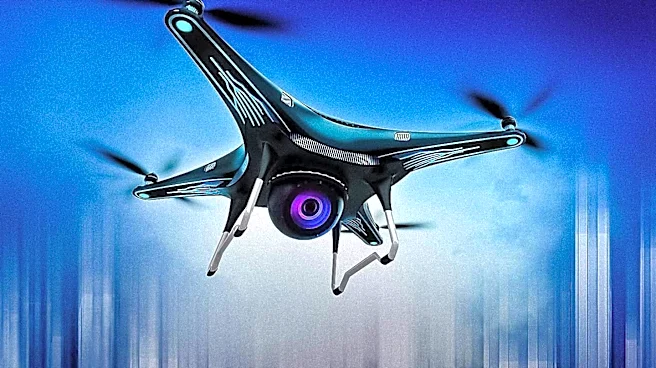
athletes and numerous fans, with the torch relay spanning all 50 U.S. states, necessitating extensive security measures. Building on lessons learned from the FIFA World Cup, DHS officials are focusing on state and local partnerships, drone mitigation, and command center operations. The agency initiated a $1.5 billion effort in August to bolster drone defenses, with awards to major vendors, and plans to allocate an additional $250 million in fiscal year 2027 to enhance state and local drone detection and mitigation capabilities.
Why It's Important?
The security preparations for the 2028 Olympics are critical for ensuring the safety of a massive international event on U.S. soil. The focus on counter-UAS technology addresses a growing and complex threat, as drones can be used for surveillance, disruption, or even attacks. This investment and strategic planning highlight the evolving nature of national security challenges and the need for advanced technological solutions. Effective security measures are essential not only to protect participants and spectators but also to maintain public confidence in the ability of U.S. authorities to manage large-scale events, impacting international relations and national prestige.
What's Next?
DHS will continue to refine its counter-UAS technologies and security protocols, with significant funding allocated for further development and deployment. The agency will work closely with state and local partners to integrate these new capabilities and ensure seamless coordination across all 50 states for the torch relay and in California for the main events. Officials will also address existing gaps, such as standardizing terminology and data interpretation across different agencies and systems, to improve real-time threat assessment and response. The affordability and reusability of counter-UAS solutions, particularly against drone swarms, will remain a key area of focus and development.
Beyond the Headlines
The extensive security planning for the 2028 Olympics, particularly concerning counter-UAS technology, reflects a broader societal shift towards addressing threats posed by rapidly advancing technologies. This effort raises important discussions about privacy, surveillance, and the balance between security measures and civil liberties. The challenge of integrating diverse technologies and ensuring interoperability among various agencies also highlights the complexities of modern governance and emergency management. Furthermore, the financial investment in counter-UAS capabilities could stimulate innovation in the defense and technology sectors, leading to new products and services with applications beyond national security events.