





What's Happening?
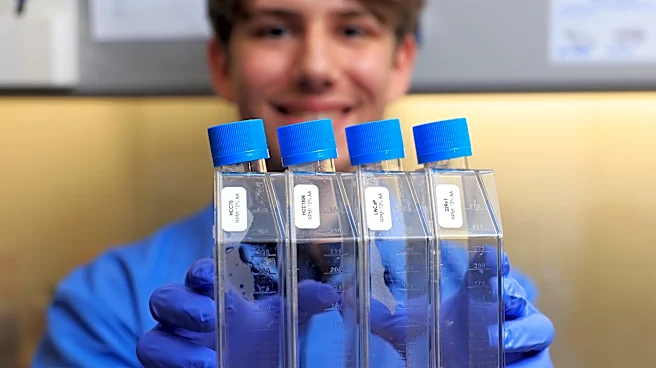
Researchers have made significant strides in understanding autism spectrum disorder (ASD) by mapping the protein-protein interactions for 100 high-confidence autism risk genes. Utilizing affinity purification-mass spectrometry (AP-MS), the study identified
over 1,800 interactions, with 87% of these being previously unreported. This comprehensive mapping effort, detailed in a new study in the journal Science, also sheds light on how distinct genetic variants can alter protein interaction networks, thereby influencing brain development. The methodological pipeline employed in this research included mass spectrometry mapping, AlphaFold prioritization, CRISPR editing, and brain organoid phenotyping. This approach provides a detailed molecular diagram of the networks underlying autism, showing that a diverse set of risk genes becomes more organized at the protein level. Dr. Matthew State, a clinical psychiatrist and genetics researcher, and Nevan Krogan, director of the Quantitative Biosciences Institute at UC San Francisco, led this collaborative effort, which has been accelerated by recent technological advancements, including AI.
Why It's Important?
This molecular map of protein interactions is crucial for advancing autism research and drug development. The vast majority of drugs are designed to target proteins, making this detailed map a vital resource for identifying potential therapeutic interventions. By understanding how autism-linked proteins interact and how genetic variants rewire these networks, scientists can pinpoint specific biological processes that are disrupted in ASD. This convergence of diverse risk genes at the protein level offers a more focused approach to treatment development, moving beyond the challenges of addressing hundreds of genes acting in myriad ways. The study's findings suggest that multiple mutations often converge on the same biological processes, particularly those related to early brain development, such as synapse construction and neuron development. This insight is particularly significant for families affected by profound autism, as it offers a clearer path toward understanding the underlying biology and developing effective treatments for a condition that currently lacks many promising therapies.
What's Next?
The researchers are already working on the next steps, which include moving into in-vitro neuronal systems to study protein interactions by tagging endogenous proteins. The ultimate goal is to examine these protein networks in vivo, particularly within complex brain tissue, to understand the interconnections between neurons and synapses. This will provide a more complete picture of how these molecular mechanisms contribute to autism. The detailed protein interaction map is expected to be widely used by researchers interested in autism and drug development, serving as a foundational resource. While the path from biological discovery to human-ready drugs is long, the study's lead investigators, Dr. Matthew State and Nevan Krogan, express hope for future therapeutic advancements. Alison Singer, head of the Autism Science Foundation, also emphasizes that these discoveries, while not leading to immediate treatments, clarify the direction for therapeutic intervention and foster hope for families.
Beyond the Headlines
This research highlights a shift in understanding complex genetic diseases like autism, moving from a gene-centric view to a protein-network perspective. The discovery that autism-linked variants can cause a 'rewiring' of protein networks, rather than just simple loss-of-function mechanisms, opens up more complex mechanistic scenes involving both loss and gain of function. This nuanced understanding could lead to more sophisticated therapeutic strategies that target specific network disruptions. The use of advanced technologies like AlphaFold prioritization and CRISPR editing, combined with brain organoid phenotyping, exemplifies the interdisciplinary approach now critical in biomedical research. This framework for connecting disease-causing genetic variations to protein networks and molecular mechanisms could be broadly applicable to other complex genetic diseases, potentially accelerating drug discovery across a wider range of conditions and offering new avenues for personalized medicine.